What Acne Analysis AI Really Reveals About Your Health
Acne is often treated as a cosmetic inconvenience, but visible breakouts can also reflect broader skin biology. An effective Acne Analysis AI tool does not diagnose disease, yet it can help identify patterns that matter: inflammatory lesions clustered along the jawline, diffuse oiliness across the T-zone, persistent redness after pimples heal, or uneven texture that suggests repeated irritation. These clues can support more consistent self-monitoring over time.
At a basic level, acne is linked to four well-known processes: increased sebum production, clogged follicles, bacterial activity, and inflammation. The biology is summarized clearly in the Wikipedia overview of acne. What makes visual analysis valuable is that these processes often create visible signals before people can describe them accurately. A person might say, "My skin feels worse," while an image-based acne severity scanner may detect that the real change is more redness, more papules on the cheeks, or a wider spread of post-inflammatory marks.
- Severity pattern: Mild comedonal acne looks different from inflamed papules and pustules.
- Distribution: Forehead, chin, jawline, and cheek breakouts may reflect different triggers.
- Recovery quality: AI can help track whether spots are clearing cleanly or leaving visible marks.
- Skin context: Hydration, texture, and tone evenness influence how acne appears and heals.
That matters because good skin decisions depend on good observation. When your baseline is objective rather than emotional, it becomes easier to judge whether a routine is helping, whether a breakout is escalating, and whether it is time to seek professional dermatology advice.
How Face Age's AI Analysis Works
Face Age uses a structured facial analysis workflow designed to turn one photo into readable skin and appearance insights in under 60 seconds. While the platform is known for biological age and beauty analysis, the same computer vision framework is useful for acne-related evaluation because skin texture, tone variation, and local irregularities are measurable image features.
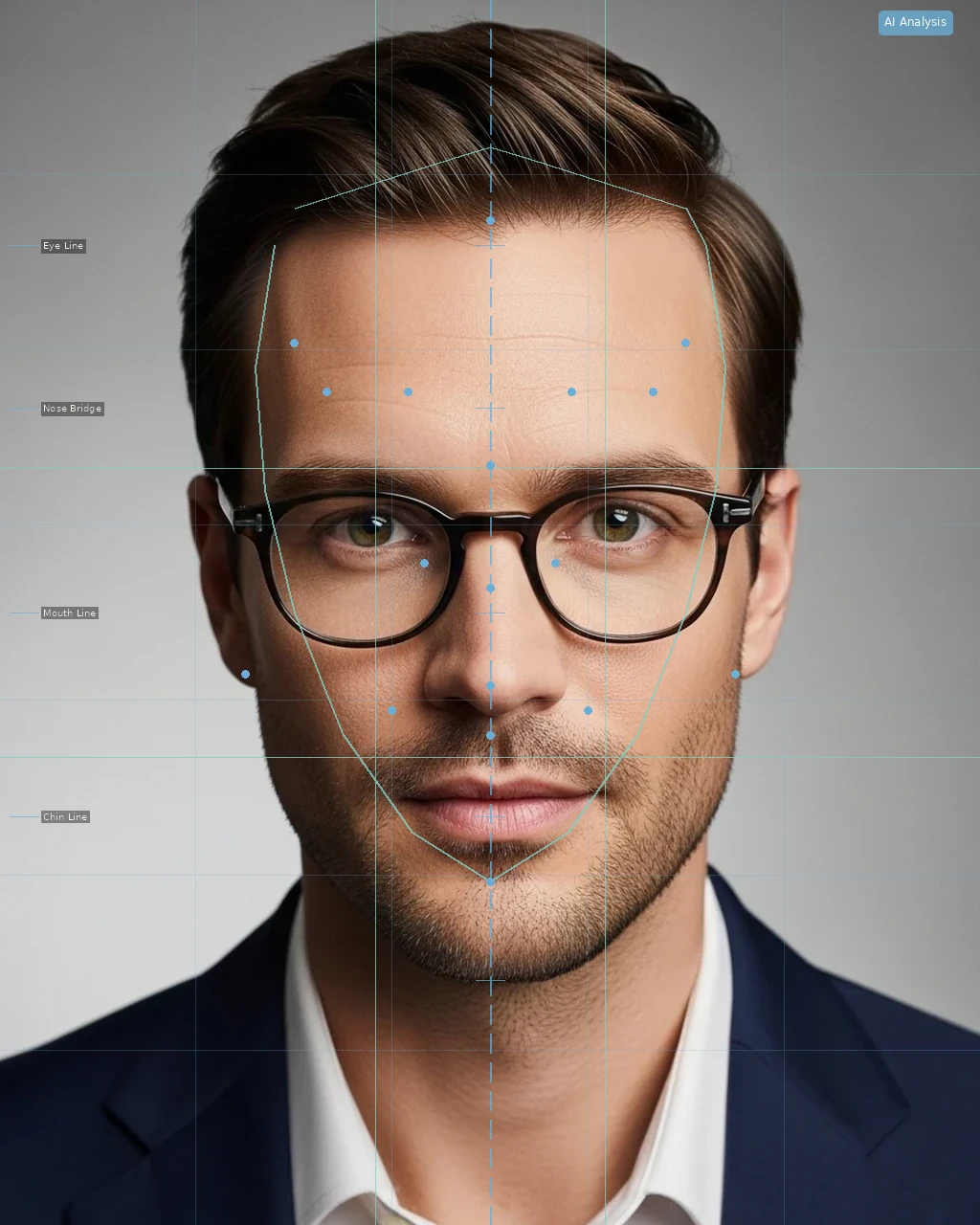
Face mapping: The system identifies 68 facial landmarks across the eyes, nose, mouth, jawline, cheeks, and forehead. These landmarks create a stable map so visible blemishes, redness, and texture changes can be assessed in the correct facial regions.
Skin feature extraction: The AI evaluates local image signals associated with breakouts, such as contrast, discoloration, uneven surface appearance, and visible congestion. At the same time, it assesses 12 age markers and broader skin health indicators, which helps place acne findings into the context of hydration, clarity, and skin evenness.
Results and tracking: You receive a structured summary that can function like a practical pimple analyzer, highlighting visible breakout severity, skin quality context, and related facial metrics. If you want a fast baseline before changing products or routines, this is a simple place to start with Face Age.
The goal is not to replace a dermatologist. It is to give you a faster, more consistent visual benchmark than mirrors, memory, or random selfie comparisons.
What You Will Discover
A strong Acne Analysis AI experience should do more than point out pimples. It should place breakouts inside a broader picture of skin condition and facial analysis. Face Age is especially useful here because it connects visible blemish patterns with tone, symmetry, texture, and aging-related markers rather than treating acne as an isolated issue.
After analysis, you can expect outputs that help you understand both immediate skin status and long-term appearance trends.
- Biological age estimate: A facial age reading based on visible skin and structural markers.
- Beauty score: A composite appearance score informed by harmony, clarity, and facial balance.
- Symmetry index: An assessment of left-right facial balance using mapped landmark positions.
- Skin health grade: A practical summary of clarity, evenness, visible hydration cues, and texture quality.
- Visible breakout assessment: A focused acne severity scanner view of inflamed spots, congestion, redness, and post-blemish marks.
- Aging forecast: A forward-looking estimate of how current skin patterns may influence visible aging trends if unchanged.
- Regional insights: Localized observations on the forehead, cheeks, chin, jawline, and nose.
- Progress tracking potential: A more objective way to compare before-and-after changes when routines, sleep, stress, or seasons shift.
For users with transactional intent, this matters because you are not only asking, "Do I have acne?" You are asking whether a tool can help you make better decisions. The answer is yes, when the analysis is structured, fast, and tied to clear visual outputs rather than vague labels.
The Science Behind Acne Analysis AI
Acne analysis through imaging sits at the intersection of dermatology and computer vision. Dermatologists have long categorized acne by lesion type, lesion count, redness, distribution, and scarring risk. Traditional systems such as global acne grading methods rely on trained visual inspection. AI does something similar at scale: it converts visible features in photographs into measurable signals that can be compared across time.
From a skin science perspective, acne lesions differ in shape, color, border definition, and surrounding inflammation. Comedones may appear as subtle texture disruptions or dark follicular plugs. Papules and pustules tend to produce more obvious elevation and erythema. Post-inflammatory hyperpigmentation changes local color distribution after the active lesion resolves. These are all image-detectable properties, especially when lighting and face position are reasonably controlled.
Researchers in dermatology and imaging have spent decades studying acne pathogenesis and lesion classification. Clinical work associated with figures such as Albert M. Kligman helped establish the biological basis of comedogenesis and follicular change, while modern imaging research has expanded into automated assessment. For background on the biological mechanisms involved, see this PubMed article on acne pathogenesis. For the redness component relevant to inflamed lesions, the underlying concept of erythema is also important.
On the computer vision side, facial analysis usually begins with landmark detection, region segmentation, and feature extraction. Landmarking stabilizes the image so the same skin zones can be compared across users or across time for the same user. Texture analysis can detect roughness and irregularity. Color-space analysis helps identify redness and uneven tone. Pattern recognition models can then estimate how likely a visible area is to represent active acne, residual marks, or normal variation.
Modern face analysis systems also benefit from work pioneered by researchers such as Paul Viola and Michael Jones in object detection, followed by later advances in convolutional neural networks for facial and dermatologic image classification. While a consumer-facing acne detection ai is not a medical diagnostic device, the underlying scientific logic is sound: visible inflammation, lesion morphology, and skin texture can be quantified from images with meaningful consistency.
The key limitation is context. Lighting, makeup, camera quality, and image angle affect interpretation. That is why the best use of AI is not absolute diagnosis, but repeatable assessment. When you take images under similar conditions, the tool becomes much more valuable for trend detection and routine evaluation.
Key Factors That Influence Your Acne Analysis
Your acne analysis result is shaped by both your skin biology and the conditions under which your photo is taken. Some factors truly change your skin. Others simply change how your skin appears to the camera. Understanding both helps you interpret results more intelligently.
First, biology. Genetics influence pore size, oil production, inflammation tendency, and how easily post-acne marks develop. Hormonal shifts can change sebum output and lesion distribution, especially around the chin and jawline. Stress may indirectly worsen acne through sleep disruption, cortisol-related effects, and changes in daily habits.
Second, environment and routine. Heat, humidity, friction from helmets or masks, harsh exfoliation, and comedogenic products can all increase visible congestion or redness. Diet remains a nuanced topic, but some evidence suggests that for certain individuals, high glycemic load and dairy intake may play a role in breakout severity.
- Genetics: Baseline oiliness, inflammation tendency, and scar risk.
- Lifestyle: Sleep, stress, exercise, and consistency with skincare.
- Environment: Pollution, sun exposure, humidity, and friction.
- Products: Occlusive makeup, over-cleansing, or poor routine fit.
- Imaging conditions: Bright sunlight, shadows, filters, and camera smoothing.
If you want the most useful reading from an acne severity scanner, take photos in even light, with a clean face, no beauty filters, and a neutral expression. Then repeat the process consistently. If you are curious how your skin is trending right now, Face Age makes that baseline easy to capture without a long setup.
Expert Tips to Improve Your Acne Analysis
The most reliable way to improve an acne-related metric is not to chase perfection. It is to reduce inflammation, protect the skin barrier, and track gradual change. AI is helpful because it rewards consistency over guesswork. Small improvements in redness, lesion count, and tone evenness become easier to notice when you measure them regularly.
Start with daily sunscreen. UV exposure can worsen post-inflammatory marks and make healing blemishes look darker or redder for longer. A broad-spectrum SPF helps protect both acne-prone skin and overall skin aging outcomes. Next, simplify your routine. Many people over-treat acne with too many acids, harsh scrubs, or drying cleansers, which can damage the barrier and make skin look more inflamed.
- Use sunscreen daily: Helps reduce visible lingering marks and protects skin recovery.
- Prioritize sleep: Poor sleep is associated with worse stress handling and slower skin recovery.
- Stay hydrated: Hydration supports barrier function, even if it does not directly cure acne.
- Choose evidence-based actives: Ingredients like benzoyl peroxide, salicylic acid, adapalene, or azelaic acid may help depending on skin type.
- Support skin with nutrition: Aim for a balanced diet rich in fiber, protein, and micronutrients.
- Exercise regularly: It supports circulation and stress regulation, but shower after sweating if your skin is acne-prone.
- Track instead of guessing: Use repeat scans to see whether changes are real.
If you want more evidence-based reading on skin and facial metrics, visit the Face Age research page. And if your breakouts are persistent, painful, scarring, or sudden in onset, seek medical advice. AI is best used as a support tool, not a substitute for treatment when treatment is needed.
The practical advantage of Face Age is speed. You can check your skin baseline before introducing a new product, after several weeks on a routine, or during periods of stress and compare results in a more disciplined way.
AI Analysis vs Traditional Methods
Traditional acne assessment often falls into three categories: self-judgment in the mirror, manual grading by a professional, or photo comparisons stored on your phone. Each has value, but each also has limitations. Self-assessment is subjective. Manual scoring is useful but not always accessible. Casual photo comparison is inconsistent because lighting, angle, and memory bias can distort what you think you see.
An AI-driven pimple analyzer offers speed and standardization. Instead of asking you to estimate whether your skin is "a bit worse," it evaluates visible features systematically across defined facial regions. Face Age adds another layer by integrating acne-related observations with broader indicators such as skin clarity, symmetry, and biological age signals.
This does not replace a dermatologist, especially for cystic acne, scarring, or prescription decisions. But for instant screening, progress tracking, and routine evaluation, Acne Analysis AI is often more practical than waiting weeks to decide whether a change is helping.
Your Privacy and Data Security
Privacy matters when you are uploading a face photo. Face Age is designed with a privacy-first approach: photos are processed in-browser whenever possible, are not stored on servers, and are deleted after analysis. Your images are not sold, reused for advertising, or shared with third parties.
That is important because facial images are sensitive data. A responsible analysis platform should minimize retention, limit exposure, and be transparent about how processing works. Face Age also aligns with GDPR-compliant data handling principles, giving users a more secure way to access instant skin insights without unnecessary friction.
Ready to Discover Your Acne Analysis?
If you are tired of guessing whether your skin is improving, Acne Analysis AI gives you a faster way to measure visible breakouts, redness, and overall skin quality. With Face Age, you can get an instant baseline, understand how acne fits into your wider skin profile, and track changes over time without booking an appointment or creating a complicated spreadsheet.
It is fast, easy, and no-signup friendly for getting started. Try Face Age now to see what your skin is showing today and make your next skincare decision with more confidence.
You May Also Like
Sunscreen for Anti-Aging: What Most Miss — Learn how sunscreen for anti-aging helps prevent wrinkles and UV damage. See...
Retinol Skin Transformation: When Results Really Show — Explore retinol skin transformation, realistic timelines, and proven anti-aging...
Skin Type Analyzer: What Your Face Reveals — Use our Skin Type Analyzer to learn what is my skin type, get tailored...