What Health Age Assessment Really Reveals About Your Health
A health age assessment is not just a prettier way to say chronological age. It is an attempt to estimate how your body appears to be aging based on measurable signs, including skin quality, facial structure changes, and visible stress markers. In practical terms, it works like a broader health score age: a summary of how your daily habits and accumulated exposures may be influencing your biological presentation.
The face is a useful window into this process because aging is visible there earlier and more consistently than in many other body regions. Changes in collagen support, pigmentation, hydration, fine lines, and elasticity all alter how old a person appears. These changes are influenced by internal biology and by external factors such as ultraviolet exposure, smoking, sleep deprivation, and nutrition.
Scientists have long studied the difference between chronological age and biological aging. While no facial analysis can replace laboratory testing or medical diagnosis, visible age has been linked to broader health patterns and can function as a meaningful screening signal. You can learn more about the broader concept of biological aging and age-related change through related scientific discussions, though health age assessment focuses on practical markers rather than theoretical extremes.
- Skin texture can reflect collagen breakdown, hydration status, and cumulative sun exposure.
- Wrinkle patterns often reveal repeated environmental and behavioral stressors.
- Tone and evenness may indicate photodamage, irritation, or barrier disruption.
- Facial symmetry and proportions help contextualize beauty perception and structural aging.
In other words, a health age assessment gives you a more personal lens on aging. It does not tell you everything about health, but it can reveal whether your visible aging pattern looks younger, older, or roughly aligned with your actual age.
How Face Age's AI Analysis Works
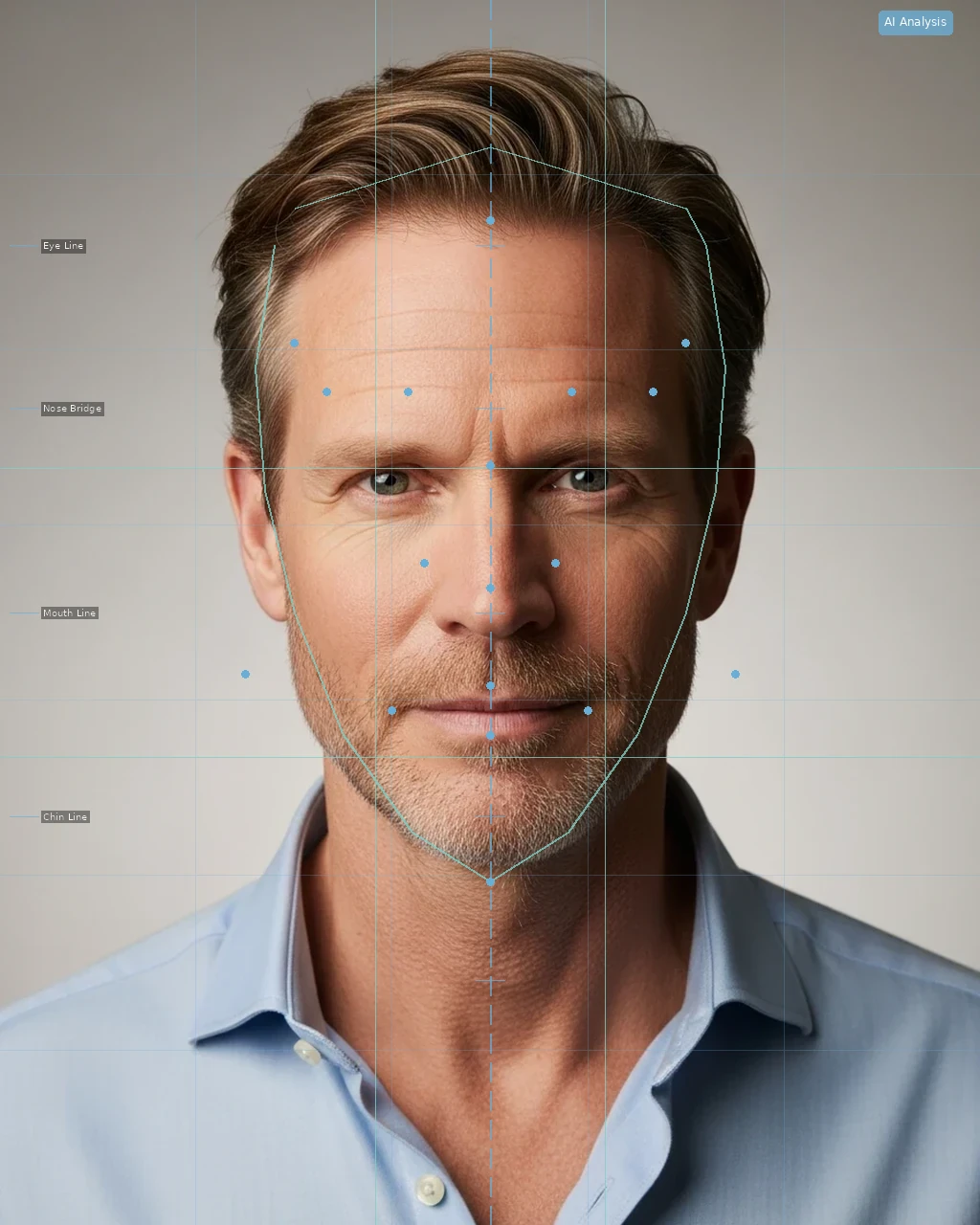
Face Age is designed to turn complex facial signals into a clear, user-friendly wellness age estimate and supporting metrics. Instead of relying on a vague impression, the system uses computer vision to examine a structured set of visible markers and facial geometry.
Facial mapping: The system detects 68 facial landmarks across the eyes, brows, nose, mouth, jawline, and overall face contour. These reference points help standardize measurements of proportion, contour, and symmetry.
Marker analysis: Face Age evaluates 12 age markers, including wrinkle distribution, skin texture variation, visible elasticity indicators, tone evenness, and other surface features associated with perceived age and skin health.
Result generation: In under 60 seconds, the platform translates those inputs into a health age assessment, biological age signals, beauty-related outputs, and actionable guidance you can use right away.
This process matters because consistency improves usefulness. Two people may look at the same face and give different opinions, but landmark-based analysis applies the same framework every time. That helps reduce subjectivity while making trend tracking more practical.
If you are curious about how your face reflects lifestyle load, recovery, and visible age patterns, trying a scan can be a fast first step. It is a practical modern alternative to a basic lifestyle age calculator because it reads real visual evidence rather than only self-reported habits.
What You Will Discover
A health age assessment becomes most useful when it goes beyond a single headline number. Face Age is built to show the components behind your result, so you can understand what is influencing how your face presents today and what may be worth improving over time.
Rather than producing an abstract score with no context, the analysis returns several outputs that together create a clearer picture of your visible aging pattern and skin condition.
Estimated biological age: A face-based age estimate derived from visible aging markers rather than your birth date alone.
Beauty score: A summary metric based on proportions, harmony, and visible presentation.
Symmetry index: A measurement of left-right facial balance, which can influence perceived attractiveness and structural assessment.
Skin health grade: A practical snapshot of hydration-related appearance, tone consistency, clarity, and signs of visible damage.
Aging forecast: An indication of where visible aging may progress if current patterns continue.
Marker-level insight: Specific feedback on wrinkles, texture, elasticity cues, and evenness.
Progress tracking potential: A baseline you can compare over time as you adjust sleep, skincare, sun habits, exercise, and nutrition.
This layered output is what makes Face Age more informative than a simple health score age. It gives you both the summary and the why. For users interested in prevention, that distinction is important, because improvement begins with knowing which signals are driving your current result.
The Science Behind Health Age Assessment
The idea behind health age assessment sits at the intersection of dermatology, aging biology, and computer vision. One core scientific insight is that perceived age is not random. Researchers including Kaare Christensen and colleagues have explored how looking older than one’s chronological age may be associated with broader aging-related patterns. In visible-aging research, the face functions as a biologically meaningful surface where cumulative exposures become measurable.
Dermatology adds another layer. Skin aging is driven by both intrinsic and extrinsic factors. Intrinsic aging reflects time-dependent biological processes such as reduced collagen production, altered elastin organization, and slower cellular turnover. Extrinsic aging is shaped by external exposures, with ultraviolet radiation playing a major role in photoaging. Repeated sun exposure contributes to pigment irregularity, fine lines, roughness, and loss of elasticity, all of which influence how old a person appears.
Clinical reviews of facial aging also show that age-related change is not limited to the skin surface. Soft tissue redistribution, bone remodeling, and shifts in facial fat compartments can alter contour, volume, and proportion over time. These structural changes matter because human observers unconsciously use them when judging age and attractiveness.
Computer vision helps convert these biological and visual cues into measurable data. Landmark detection makes it possible to map stable facial reference points. Texture analysis can evaluate fine surface variation. Color and contrast analysis can detect unevenness and visible signs associated with irritation or photodamage. When combined, these methods support more standardized age estimation than unaided visual judgment.
For readers who want deeper scientific context, PubMed includes substantial literature on facial aging and perceived age as a biomarker. Useful starting points include research on perceived age as a clinically useful biomarker of ageing and reviews on mechanisms of skin aging. These papers help explain why visible facial traits can carry real biological information, even when they are not diagnostic on their own.
That distinction is essential. A health age assessment is best understood as an evidence-informed estimation tool. It does not diagnose disease, but it can reveal whether your face shows a pattern that is more consistent with healthy recovery and maintenance or with accumulated stress, environmental burden, and accelerated visible aging.
Key Factors That Influence Your Health Age Assessment
Your result is shaped by more than genetics, and that is good news. While inherited skin type, bone structure, and melanin levels influence baseline appearance, many visible aging signals are highly responsive to daily choices and long-term exposures.
Sun exposure is one of the biggest drivers. Ultraviolet radiation accelerates collagen breakdown, uneven pigmentation, and texture changes. Sleep also matters because chronic sleep disruption can affect recovery, inflammation, and visible under-eye changes. Smoking and air pollution are associated with oxidative stress and skin dullness, while nutrition influences barrier health, hydration, and repair capacity.
Exercise can support circulation and metabolic health, both of which may contribute to a stronger overall wellness age profile. Stress is another major variable. Elevated chronic stress can shape inflammatory pathways, influence sleep quality, and indirectly worsen skin condition and visible fatigue.
- Genetics: Baseline skin thickness, pigmentation tendencies, and facial structure.
- Lifestyle: Sleep, diet, alcohol intake, smoking, movement, and stress load.
- Environment: UV exposure, climate, pollution, and workplace conditions.
- Skincare: Sunscreen use, cleansing habits, moisturization, and evidence-based actives.
This is why a health age assessment can be motivating. It reflects patterns you may be able to change. If you want to see where your current habits may be showing up visually, Face Age offers a quick way to establish a baseline and start tracking what actually helps.
Expert Tips to Improve Your Health Age Assessment
Improving your visible health age rarely requires extreme measures. In most cases, the biggest gains come from consistent, boring fundamentals that protect skin structure, support recovery, and reduce cumulative stress.
Start with daily sunscreen. Broad-spectrum SPF helps limit photoaging, pigmentation changes, and collagen degradation. It is one of the most evidence-backed steps for preserving a younger visible age over time. Pair that with a simple routine that supports the skin barrier: gentle cleansing, regular moisturization, and avoiding unnecessary irritation.
Sleep is another high-value target. Aim for consistent, adequate sleep because recovery processes affecting skin appearance, inflammation, and overall vitality are strongly tied to sleep quality. Hydration also matters, especially when combined with barrier-supporting skincare, though water alone is not a complete fix for dry-looking skin.
Nutrition deserves attention too. Diets rich in protein, colorful produce, omega-3 fats, and minimally processed foods help support tissue maintenance and reduce some drivers of oxidative stress. Regular exercise supports circulation, metabolic health, and stress regulation, all of which can improve how you look and feel.
- Use broad-spectrum SPF every day.
- Prioritize 7 to 9 hours of quality sleep.
- Follow a simple, non-irritating skincare routine.
- Eat for skin and metabolic health, not quick fixes.
- Exercise consistently and manage stress realistically.
If you want the evidence behind these strategies, explore Face Age research resources. Then use repeated scans to see whether your changes improve your visible markers over time. That is where a health age assessment becomes more than a curiosity tool: it becomes feedback.
AI Analysis vs Traditional Methods
Traditional methods of age and skin assessment often rely on dermatologist visits, manual visual scoring, or subjective impressions in a mirror. Those approaches can be valuable, especially in medical settings, but they are not always fast, repeatable, or accessible for routine self-monitoring.
AI-based analysis offers a different advantage. By using the same landmark framework and image-processing logic each time, Face Age can provide a more standardized snapshot in seconds. It does not replace professional diagnosis, but it can make ongoing tracking easier than waiting for appointments or comparing old selfies by memory.
Manual assessments are also influenced by lighting, bias, and inconsistency between observers. A structured system that analyzes 68 landmarks and multiple visible age markers can reduce some of that variation. For users who want a practical health score age tool with instant feedback, AI offers speed, convenience, and repeatability that older methods often lack.
Your Privacy and Data Security
Privacy matters when you are sharing a facial image. Face Age is built with a privacy-first approach designed to reduce unnecessary exposure of personal data.
Your photos are processed in-browser whenever possible, which means analysis happens locally on your device rather than being permanently uploaded for storage. Images are not stored on servers after analysis, are deleted immediately from active processing, and are never shared with third parties for advertising or unrelated use.
The platform is designed with GDPR-compliant principles in mind, giving users greater transparency and control. That means you can explore your health age assessment without wondering whether your face is being turned into someone else’s dataset.
Ready to Discover Your Health Age Assessment?
Your chronological age tells you how many years you have lived. A health age assessment can tell you how your face reflects those years, your habits, and your environment right now. That perspective can be useful whether your goal is healthier skin, a better wellness age, or a more realistic baseline for change.
Face Age makes the process simple: it is fast, free to try, instant, and requires no signup for an initial analysis. If you want a clearer picture of your visible biological age, skin health, and facial balance, this is an easy place to start. Try Face Age and see what your face may be revealing in under a minute.
You May Also Like
How Old Do I Look Test: See What Your Face Reveals — Try a How Old Do I Look Test to estimate face age, skin aging and symmetry in...
Youth Index Test: What Your Face Reveals — Take a Youth Index Test to see your youthfulness score, skin age and anti-aging...
Biological Age Test: What Does Your Face Reveal? — Take a biological age test to see how your face reflects health, skin age, and...