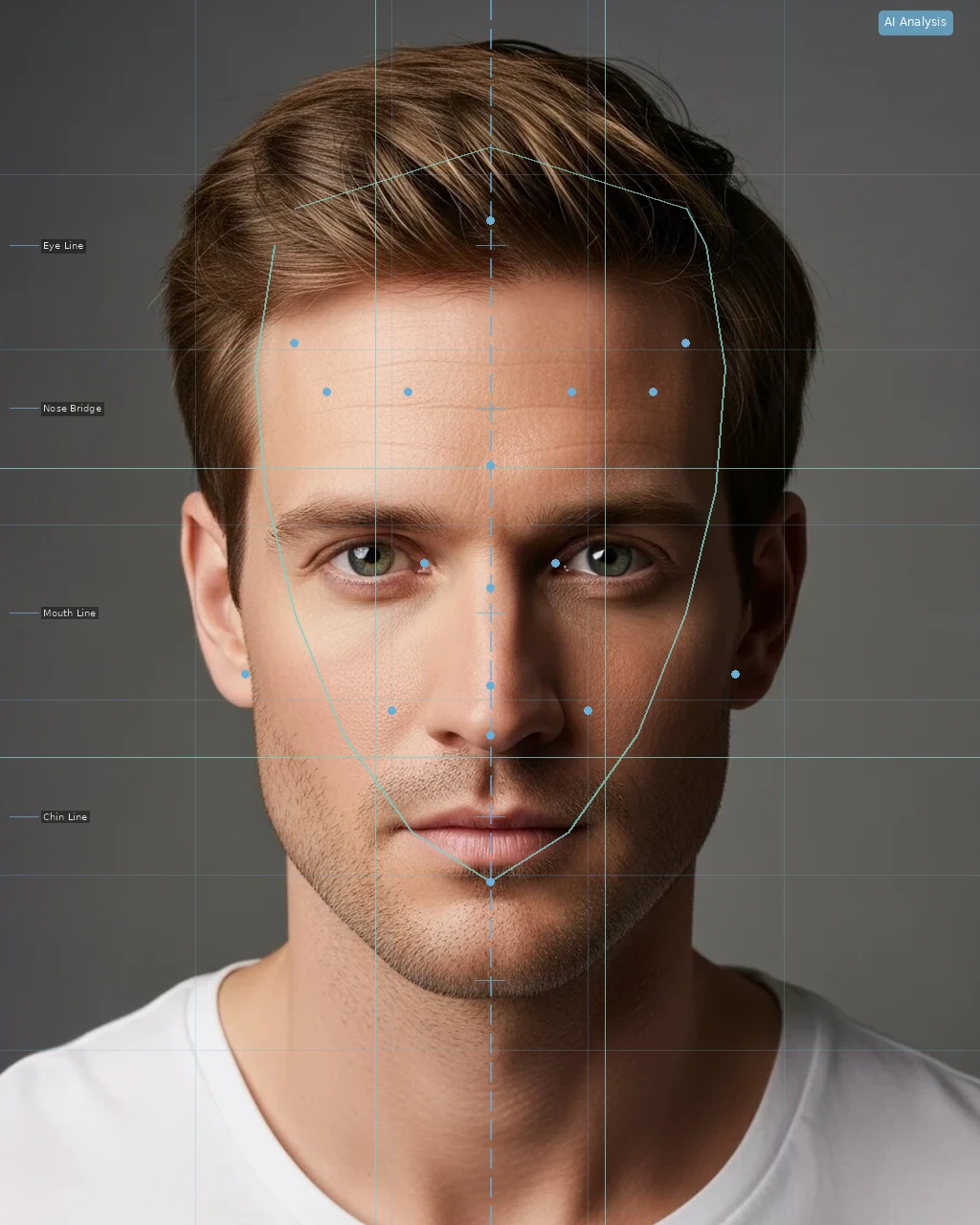
What Rate My Face AI Really Reveals About Your Health
A face score is not just about attractiveness. A well-designed Rate My Face AI system can also reflect visible patterns linked to skin condition, biological aging, and lifestyle stress. Facial appearance is shaped by collagen integrity, pigmentation, hydration, inflammation, sleep quality, and cumulative sun exposure.
That matters because the face often shows change before people notice it elsewhere. Fine lines, dullness, uneven tone, under-eye shadowing, and reduced elasticity can all act as outward clues to underlying processes such as photoaging, dehydration, or poor recovery. In this sense, an ai face rating can become a structured snapshot rather than a vanity number.
Beauty perception itself is also partly measurable. Research in psychology and computer vision has repeatedly examined how symmetry, averageness, and proportional balance influence how faces are perceived. While beauty remains culturally shaped and deeply personal, certain facial patterns are consistently studied across populations.
For example, facial symmetry is a recognized area of research in both aesthetics and biology. You can explore the concept further in this Wikipedia overview of facial symmetry. Skin aging is similarly linked to visible surface changes, especially from ultraviolet exposure and collagen breakdown.
- Skin texture can reflect hydration, barrier function, and cumulative damage.
- Wrinkle patterns may indicate both chronological aging and environmental exposure.
- Pigmentation unevenness can signal sun stress, inflammation, or irritation.
- Facial proportions affect perceived harmony and visual balance.
So when people ask a face rating app to score them, the most useful answer is not simply whether a face is attractive. It is what measurable features are helping or lowering the score, and which of those features are realistically modifiable.
How Face Age's AI Analysis Works
Face Age is designed to make facial analysis fast, specific, and understandable. Instead of giving you a vague number, it maps visible structure and skin-related signals into a set of interpretable outputs. The full process takes under 60 seconds, making it practical for quick check-ins as well as long-term tracking.
Image capture and landmark mapping. After you upload a clear front-facing photo, the system identifies 68 facial landmarks across key areas such as the eyes, brows, nose, lips, jawline, and facial contour. These points help quantify proportions, alignment, and symmetry.
Marker extraction. The system then evaluates 12 age markers and visible skin features, including texture variation, wrinkle tendency, elasticity-related cues, tone evenness, and localized signs of fatigue or UV exposure. This is where the artificial intelligence beauty and skin-health layers begin to separate structure from surface condition.
Score generation and interpretation. Finally, Face Age translates those measurements into outputs such as biological age estimate, beauty score, symmetry index, and skin health grade. Rather than leaving you with a number alone, it highlights the factors that appear to influence the result most strongly.
This is why Face Age works better than a generic selfie filter or novelty face rating app. It measures defined points and visible markers instead of guessing. If you want a quick, repeatable baseline for your face, this gives you a practical place to start.
Explore the research background here if you want to understand the scientific basis behind the analysis in more depth.
What You Will Discover
A useful face analysis should answer more than one question. Most people want to know how attractive they appear, but they also want to understand why. Face Age breaks this down into several outputs so your result is easier to interpret and act on.
Biological age estimate: A visual age assessment based on skin texture, wrinkle patterns, elasticity indicators, and facial aging cues rather than calendar age alone.
Beauty score: A composite score built from facial proportions, harmony, balance, and appearance-related features studied in aesthetics research.
Symmetry index: A structural comparison of left and right facial regions to show how balanced your features appear in a frontal image.
Skin health grade: An overview of visible hydration signals, evenness, clarity, and texture quality that may affect both appearance and age perception.
Aging forecast: A directional estimate of which visible markers may become more pronounced if current skin patterns continue.
Feature-level insights: Specific feedback on areas such as under-eyes, forehead lines, nasolabial definition, tone variation, or overall facial balance.
These outputs matter because they turn a simple ai face rating into something more diagnostic. You are not left wondering whether a lower score came from asymmetry, skin fatigue, or age-related texture changes.
For someone comparing skincare routines, sleep habits, or seasonal changes, this kind of structure is especially helpful. A face score becomes more meaningful when you can track which underlying components are stable and which are changing over time.
The Science Behind Rate My Face AI
The idea of scoring a face may sound modern, but the building blocks come from older fields: dermatology, anthropometry, perceptual psychology, and computer vision. AI systems do not invent beauty rules from scratch. They detect measurable patterns from images and compare them to trained reference distributions.
In facial aesthetics, researchers have long studied how humans respond to symmetry, averageness, skin quality, and proportional relationships. Evolutionary psychologist David Perrett and colleagues helped popularize work showing that averaged facial features and smoother skin can influence perceived attractiveness. At the same time, clinicians in aesthetic medicine have emphasized that skin surface quality often changes attractiveness judgments as much as shape does.
That skin component is important. Dermatologist studies have shown that wrinkles, hyperpigmentation, texture roughness, and photodamage substantially affect perceived age. Photoaging, in particular, is strongly linked to cumulative ultraviolet exposure. A concise overview is available in this Wikipedia article on photoaging.
At the image-analysis level, modern systems rely on facial landmark detection and pattern recognition. Landmark models estimate the location of facial reference points, which makes it possible to compare distances, angles, contour relationships, and side-to-side alignment. From there, image features related to contrast, smoothness, pore visibility, and wrinkle depth can be used to estimate age-related markers or skin condition.
PubMed literature also supports the broader connection between facial appearance and biological aging signals. For example, studies on perceived age have found that looking older than one's chronological age may correlate with health-related variables and cumulative aging burden. See this PubMed paper on perceived age as a biomarker of aging.
Computer vision methods for automated facial analysis have matured significantly as well, especially in landmark localization, facial segmentation, and age estimation. These systems are not perfect, and they are affected by lighting, pose, image quality, and demographic representation in training data. But when used carefully, they can provide consistent comparative measurements that are difficult to achieve through casual mirror checks.
The key scientific point is this: artificial intelligence beauty analysis is most credible when it combines measurable geometry with visible skin biomarkers, and when it presents the result as probabilistic guidance rather than absolute truth. That is the difference between a novelty filter and a useful face assessment tool.
For readers interested in the relationship between facial appearance and health perception, another helpful resource is this PubMed entry on facial cues and age-related perception. Together, these lines of research explain why a face rating app can be informative when the methods are transparent and the claims stay grounded.
Key Factors That Influence Your Face Rating
No face score exists in a vacuum. Your result is shaped by biology, habits, environment, and the conditions of the photo itself. Some drivers are relatively fixed, while others are highly responsive to lifestyle change.
Genetics influence bone structure, eye spacing, skin thickness, melanin distribution, and baseline collagen behavior. These inherited traits affect symmetry patterns, facial proportions, and the rate at which visible aging markers appear.
Lifestyle has a powerful effect on day-to-day appearance. Chronic sleep deprivation can increase under-eye darkness and puffiness. Smoking is associated with premature wrinkling and dullness. Nutrition, alcohol intake, and stress all influence inflammation, hydration, and skin clarity.
Environmental exposure is another major factor. Ultraviolet light accelerates photoaging, while pollution can contribute to oxidative stress and uneven tone. Dry indoor air, seasonal changes, and heat also affect skin barrier function and visible texture.
Skincare habits matter more than many people expect. Consistent sunscreen use, appropriate cleansing, moisturization, and evidence-based actives can shift the visible markers that an ai face rating tool detects over time.
- Fixed or slower-changing factors: genetics, bone structure, natural asymmetry.
- Faster-changing factors: hydration, sleep, irritation, inflammation, lighting, and recent sun exposure.
- Medium-term factors: pigmentation, texture quality, elasticity trends, and wrinkle progression.
If you want a more meaningful result, use a clear, neutral photo and then retest periodically under similar conditions. That makes it easier to see whether your score is changing because of your habits rather than random photo variation. A practical next step is to run a baseline analysis now and compare again after four to eight weeks of consistent skincare and recovery habits.
Expert Tips to Improve Your Face Rating
The most effective way to improve a face score is not to chase perfection. It is to improve the visible variables that are both measurable and biologically meaningful. In practice, that usually means protecting collagen, reducing inflammation, and supporting skin barrier health.
Wear sunscreen daily. Broad-spectrum SPF is one of the best-supported strategies for reducing photoaging. Consistent use helps limit new pigmentation, collagen breakdown, and texture roughening caused by UV exposure.
Prioritize sleep. Recovery shows on the face. Adequate sleep supports skin repair, helps reduce puffiness and dullness, and may improve overall facial freshness in ways that influence both age perception and beauty scoring.
Hydrate and support the barrier. Dehydrated skin can look rougher, flatter, and less elastic. A gentle cleanser, a suitable moisturizer, and avoiding over-exfoliation often improve visible texture more than aggressive routines.
Eat for skin health. Diets rich in protein, colorful produce, omega-3 fats, and minimally processed foods help support collagen maintenance and inflammatory balance. Extreme dieting, by contrast, can sometimes make the face look more tired or hollow.
Exercise consistently. Regular movement supports circulation, metabolic health, stress regulation, and sleep quality. Those effects can indirectly improve facial appearance over time.
- Daily: sunscreen, hydration, gentle cleansing, regular sleep timing.
- Weekly: monitor irritation, adjust active ingredients, review progress photos.
- Long term: avoid smoking, manage chronic stress, protect against sun damage year-round.
For evidence summaries and methodology details, visit Face Age research resources. The most honest approach is to make one or two sustainable improvements, then use the tool again later to see whether your biological age markers, skin grade, or symmetry presentation changed under similar photo conditions.
AI Analysis vs Traditional Methods
Traditional facial assessment usually falls into three categories: subjective opinions, manual scoring by trained professionals, or dermatologist evaluation focused on skin health. Each has value, but each also has limits.
Friends, social media polls, and informal rating forums are fast, yet highly inconsistent. They are influenced by bias, lighting, trends, and emotion. Manual aesthetic assessments can be more structured, but they take time and may still vary from one evaluator to another.
Dermatologist visits are ideal when you need diagnosis or treatment guidance, especially for acne, pigmentation disorders, rashes, or concerning lesions. But they are not typically designed to provide an instant, repeatable beauty-and-aging dashboard for routine self-tracking.
Face Age fills a different role. It offers instant AI analysis using the same core framework each time, which makes it useful for baseline measurement and trend tracking. It does not replace medical care, but it can make everyday observation more objective than a mirror or a casual selfie comparison.
Your Privacy and Data Security
Privacy matters when the subject is your face. Face Age is built with a privacy-first approach so users can analyse a photo without wondering where it ends up.
Photos are processed in-browser whenever possible, which means the analysis runs locally on your device rather than being permanently stored on remote servers. Images are not kept after analysis, are not sold, and are not shared with third parties for advertising purposes.
That matters because facial data is sensitive personal data. Face Age is designed around clear deletion practices, limited retention, and GDPR-aligned handling standards. In practical terms, you get the benefit of rapid facial analysis without turning your selfie into a long-term data asset for someone else.
Ready to Discover Your Face Rating?
If you have been searching for a smarter way to answer, “How attractive is my face?” a structured AI analysis gives you more than a blunt score. It shows how symmetry, skin health, visible age markers, and facial proportions combine to shape the result.
Face Age makes that process fast, private, and easy to repeat. There is no complicated setup, no long wait, and no need for expert knowledge to understand your baseline. Try it now to see your beauty score, biological age estimate, and skin insights in under 60 seconds.
You May Also Like
Celebrity Look Alike Test: Find Your Famous Match — Take a celebrity look alike test to find your face match, beauty insights, and...
Beauty Score Test: What Your Face Reveals — Take a beauty score test to see your facial beauty score, symmetry and skin...
Golden Ratio Face Test: What Your Score Means — Take a Golden Ratio Face Test to understand facial harmony, symmetry, and...