What AI Skincare Analysis Really Reveals About Your Health
Your face is not just a cosmetic surface. It is a biologically active tissue that reflects hydration, inflammation, sun exposure, sleep quality, stress load, and the cumulative effects of everyday habits. A well-designed AI skincare analysis does not diagnose disease, but it can detect visible patterns associated with skin aging and skin health that are relevant to overall wellbeing.
For example, fine lines, rough texture, pigment irregularity, and reduced visible firmness may reflect the long-term effects of photoaging, oxidative stress, and reduced collagen support. Changes in facial appearance can also be influenced by hydration status, sleep disruption, smoking, diet quality, and environmental exposure. That makes facial analysis useful not only for beauty goals, but also for tracking lifestyle impact.
Skin is the body’s largest organ, and its condition matters. A digital review of visible skin markers can help you notice patterns that deserve attention:
- Texture changes that may reflect dryness, barrier disruption, or cumulative UV exposure.
- Wrinkle patterns that suggest repetitive expression, collagen breakdown, or sun damage.
- Tone unevenness linked to inflammation, pigmentation, or vascular changes.
- Symmetry and proportions that influence perceived attractiveness and visual age.
- Elasticity indicators that may correspond with structural aging processes.
This is why an AI dermatology scan or skin analysis app can be valuable even if your main goal is cosmetic. It gives you a baseline. Once you can measure visible changes more consistently, you are in a much better position to improve your routine and monitor progress over time.
How Face Age's AI Analysis Works
Face Age is designed to make skin assessment fast, structured, and easy to repeat. Instead of relying on subjective self-judgment, it uses computer vision to evaluate facial geometry and visible skin features from a single image. The process takes under 60 seconds, making it simple to check your current status and revisit it after changes to your skincare or lifestyle.
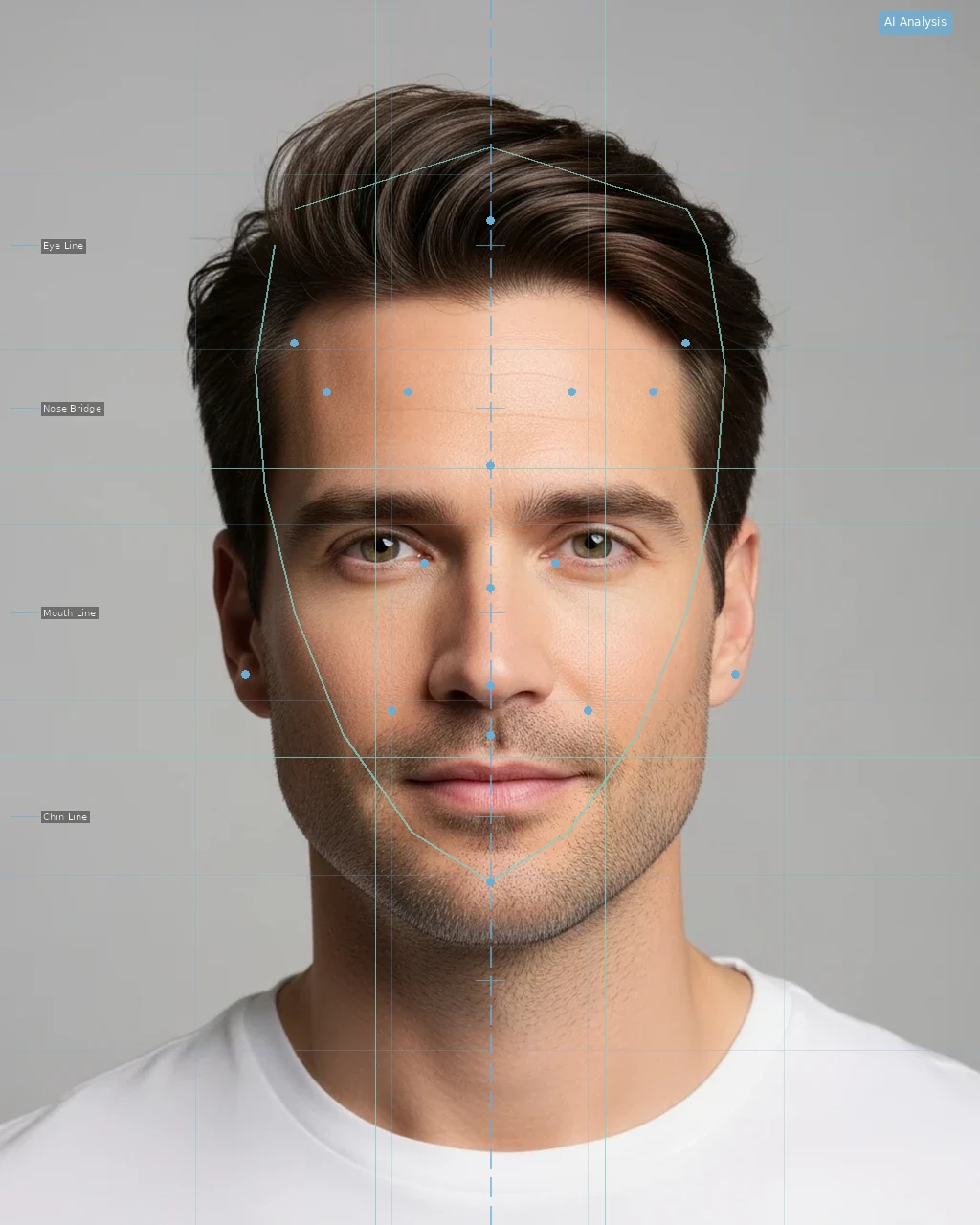
Image capture and landmark mapping. After you upload or take a clear facial photo, the system identifies 68 facial landmarks across key regions such as the eyes, brows, nose, lips, jawline, and cheek contours. These reference points help standardize analysis of proportions, symmetry, and age-related facial cues.
Skin and aging marker evaluation. The platform then assesses 12 age markers, including visible wrinkle zones, texture variation, signs of uneven tone, and other appearance-based indicators associated with biological aging. This creates a more layered profile than a simple beauty filter or selfie score.
Result generation and interpretation. You receive a concise report with metrics such as biological age estimate, beauty score, symmetry index, and skin health indicators. The goal is clarity, not overload, so you can quickly understand what to improve. If you want an instant, repeatable skin analysis app experience without booking an appointment, Face Age offers a practical place to start.
Because the analysis is quick and consistent, it is useful for tracking progress after skincare changes, improved sun protection, or better sleep habits. That makes it more than a one-time curiosity; it can become part of your personal skin monitoring routine.
What You Will Discover
A good AI skin analyzer should give you more than a generic score. Face Age is built to translate a facial image into several meaningful outputs, so you can understand not only how your skin looks now, but also which dimensions may deserve attention.
When you complete your analysis, you may see insights such as:
- Biological age estimate based on visible facial aging markers rather than birth date alone.
- Beauty score informed by facial balance, harmony, and appearance-based proportions.
- Symmetry index showing how closely left and right facial regions align.
- Skin health grade reflecting visible clarity, texture consistency, and tone evenness.
- Wrinkle and texture observations highlighting areas where aging may be more noticeable.
- Elasticity-related indicators derived from visible signs associated with firmness and structural aging.
- Aging forecast that helps contextualize your current skin appearance and what may happen if patterns continue.
- Progress tracking potential so you can compare results after routine changes, improved sunscreen use, or lifestyle adjustments.
These outputs are especially helpful if you have ever asked questions like: Is my skin improving? Do I look more tired than usual? Is pigmentation becoming more visible? Is my current routine addressing the right problem? A digital skin assessment turns those subjective concerns into structured observations.
The practical value is decision-making. If your skin health grade is lower than expected but symmetry and facial proportions are strong, the next step may be skincare and UV protection rather than cosmetic intervention. If visible aging markers are concentrated in one region, you can focus your effort instead of guessing.
The Science Behind AI Skincare Analysis
The scientific basis for AI skincare analysis sits at the intersection of dermatology, imaging science, and computer vision. Human observers are good at noticing major facial features, but much less consistent when judging subtle texture differences, small asymmetries, or gradual changes over time. Computational systems improve consistency by extracting visual patterns from images using standardized measurements.
In dermatology and skin research, visible facial features have long been used as proxies for aging and environmental exposure. Wrinkle distribution, pigmentation, roughness, pore visibility, and sagging patterns are all commonly studied markers. Research on skin aging has shown the major role of ultraviolet radiation, which accelerates collagen degradation and pigment changes through mechanisms linked to ultraviolet exposure and oxidative stress.
Important work by researchers such as Albert Kligman helped distinguish intrinsic aging from extrinsic aging, especially the effects of chronic sun exposure. That distinction matters because two people of the same chronological age can have very different visible skin ages depending on their environment and habits. Reviews indexed on PubMed discuss how facial skin aging is influenced by structural changes in the epidermis, dermis, collagen, elastin, and pigmentation pathways, as well as lifestyle factors such as smoking and nutrition. See, for example, this PubMed article on skin aging exposome factors.
Computer vision adds another layer by quantifying geometry and texture. Landmark detection allows systems to map stable anatomical points, while image analysis techniques estimate contrast, line density, local texture variation, and regional asymmetry. These methods have become increasingly common in medical imaging and aesthetic assessment because they reduce observer variability. In facial analysis, landmark-based systems can standardize comparisons between different faces and between repeat images of the same person.
There is also a growing body of work around perceived age as a biomarker. Studies suggest that how old a face appears can correlate with health status and cumulative aging processes. A review of the topic can be explored through aging research and related clinical literature. Another useful PubMed resource is this article on skin aging and photoaging mechanisms, which summarizes how environmental and biological forces shape visible skin change.
That said, scientific credibility depends on boundaries. An AI dermatology scan for consumer skincare is not the same as a medical diagnosis. It can estimate and flag visible patterns, but it cannot replace clinical examination for rashes, suspicious lesions, or disease. Its strength lies in screening appearance-based markers consistently, quickly, and repeatably so users can better understand trends and respond earlier.
Key Factors That Influence Your Skin Age and Skin Health
Your results are shaped by more than your cleanser or serum. Skin appearance emerges from an interaction between genetics, hormones, lifestyle, environment, and daily care. That is why two people with similar routines can still show different patterns on a digital skin assessment.
The biggest influences usually include:
- Genetics. Baseline collagen density, pigment behavior, facial structure, and wrinkle tendency vary significantly across individuals.
- Sun exposure. UV radiation is one of the most important drivers of premature visible aging, especially fine lines, uneven tone, and texture roughness.
- Sleep and stress. Poor sleep can affect recovery, dullness, puffiness, and visible fatigue. Chronic stress may influence inflammation and skin barrier function.
- Nutrition and hydration. Diet quality, alcohol intake, and hydration can affect clarity, glow, and resilience.
- Smoking and pollution. These exposures are associated with oxidative stress, collagen damage, and dull, uneven skin appearance.
- Skincare consistency. Daily sunscreen, gentle cleansing, moisturization, and evidence-based actives often matter more than expensive but irregular routines.
Hormonal shifts also play a role, especially in sebum balance, pigmentation, and skin thickness. Seasonal changes can alter hydration and redness, while camera lighting and image quality can affect how some features are perceived. That is one reason Face Age works best when you use clear, front-facing photos under consistent conditions.
If you want your scan to be useful, treat it as a baseline and repeat it over time. Small improvements become much easier to detect when your images are taken in similar light, with a neutral expression, and without heavy filters or makeup.
Expert Tips to Improve Your Skin Age and Skin Health
If your analysis shows visible aging or uneven skin quality, the good news is that many appearance-based markers respond to consistent habits. Improvement rarely comes from one miracle product. It usually comes from a set of boring but effective behaviors repeated over months.
Start with the essentials:
- Use broad-spectrum sunscreen every day. Daily SPF is one of the most evidence-based ways to reduce further photoaging and help preserve collagen.
- Prioritize sleep. Aim for consistent, sufficient sleep to support repair processes and reduce visible fatigue.
- Support the skin barrier. Use a gentle cleanser and moisturizer suited to your skin type to reduce dryness and irritation.
- Hydrate and eat well. A diet rich in fruits, vegetables, protein, and healthy fats can support overall skin function.
- Exercise regularly. Physical activity improves circulation and supports overall metabolic health, which may influence skin appearance.
- Limit smoking and excess alcohol. Both can worsen dullness, dehydration, and long-term structural aging.
If you tolerate active ingredients, retinoids, vitamin C, niacinamide, and exfoliating acids can be useful depending on your goals. The right choice depends on whether your main concern is pigmentation, fine lines, congestion, or barrier weakness. Introduce changes gradually and avoid over-layering harsh products that compromise the skin barrier.
Tracking is important. A skin routine may feel effective without actually changing visible outcomes. Repeating an AI skincare analysis gives you a clearer way to see whether your skin health grade, texture profile, or biological age estimate is shifting in the right direction. For deeper background on the evidence behind aging markers and imaging-based analysis, explore Face Age research resources.
Most importantly, focus on sustainable improvement rather than perfection. Better sun protection, better sleep, and a simpler routine often do more for your skin than chasing every trend. If you want objective feedback while you refine your approach, Face Age makes it easy to check in regularly.
AI Analysis vs Traditional Methods
Traditional skin evaluation usually falls into one of three categories: self-assessment in the mirror, in-person aesthetic consultation, or clinical dermatology review. Each has value, but they also have limitations. Self-assessment is subjective. Manual scoring can vary between observers. Clinical visits are valuable but not always convenient for routine appearance tracking.
An AI skin analyzer offers a different advantage: speed and consistency. Face Age can review facial geometry and visible skin markers in seconds, producing structured outputs without requiring a booking, travel time, or repeated professional photography. That makes it useful for monitoring trends between appointments.
It is not a replacement for a dermatologist when you have a medical concern. Instead, it complements traditional care by giving you an instant, repeatable snapshot of visible aging and skin quality. For users interested in optimization, that combination of convenience and objectivity is what makes an AI dermatology scan especially practical.
Your Privacy and Data Security
Skin analysis involves personal images, so privacy is not optional. Face Age is built with a privacy-first approach designed to minimize data exposure. Photos are processed in the browser wherever possible, which means your image does not need to be permanently uploaded to a remote server for routine analysis.
Your photo is never stored after analysis, is deleted immediately from active processing, and is not shared with third parties. There is no hidden resale of your facial data, and the platform is designed around GDPR-compliant handling principles.
That matters because a useful skin analysis app should not force you to trade privacy for insight. With Face Age, you can get fast results while maintaining control over your personal data.
Ready to Discover Your Skin Age and Skin Health?
Your skin carries a visible record of sun exposure, stress, sleep, hydration, and routine quality. A fast AI skincare analysis helps you see those patterns more clearly by translating a simple photo into practical metrics you can understand and track.
With Face Age, you can get an instant assessment of biological age markers, skin health signals, and facial harmony in under a minute. No complicated setup, no guesswork, and no need to wait weeks to know whether your routine is helping. If you want a free, fast, no-signup starting point, try Face Age now and see what your skin is revealing.
You May Also Like
Sunscreen for Anti-Aging: What Most Miss — Learn how sunscreen for anti-aging helps prevent wrinkles and UV damage. See...
Skin Type Analyzer: What Your Face Reveals — Use our Skin Type Analyzer to learn what is my skin type, get tailored...
Blue Light Skin Damage: What Screens May Reveal — Learn how blue light skin damage may affect aging, pigment, and skin health....