What Blue Light Skin Damage Really Reveals About Your Health
Blue light skin damage is not just a beauty concern. It can also reflect how well your skin handles environmental stress, inflammation, pigment regulation, and barrier resilience. While high-energy visible light does not behave like UVB, it may still influence oxidative processes in the skin, especially when exposure is repeated and combined with other stressors such as sunlight, heat, poor sleep, and air pollution.
Skin is a living organ with immune, sensory, and protective functions. When facial skin starts showing more persistent redness, uneven tone, rough texture, or a tired appearance, it can signal cumulative strain on these systems. Research into visible light and pigmentation suggests that some individuals, especially those with medium to deeper skin tones, may notice more post-inflammatory darkening or persistent discoloration after repeated exposure.
This matters because the face often displays early signs of biological stress before other areas do. Subtle changes in clarity, elasticity indicators, or wrinkle formation may reveal how effectively your skin is repairing itself day to day.
- Texture changes can suggest altered barrier function and lower hydration.
- Uneven pigmentation may reflect oxidative stress and inflammation pathways.
- Fine lines and dullness can indicate cumulative environmental exposure.
- Sensitivity may point to a compromised skin barrier.
To understand the light spectrum involved, it helps to review visible light and where blue wavelengths fit within it. Blue light alone is rarely the whole story, but it can be one piece of a broader skin health pattern that includes sun habits, sleep quality, skincare, and digital lifestyle.
How Face Age's AI Analysis Works
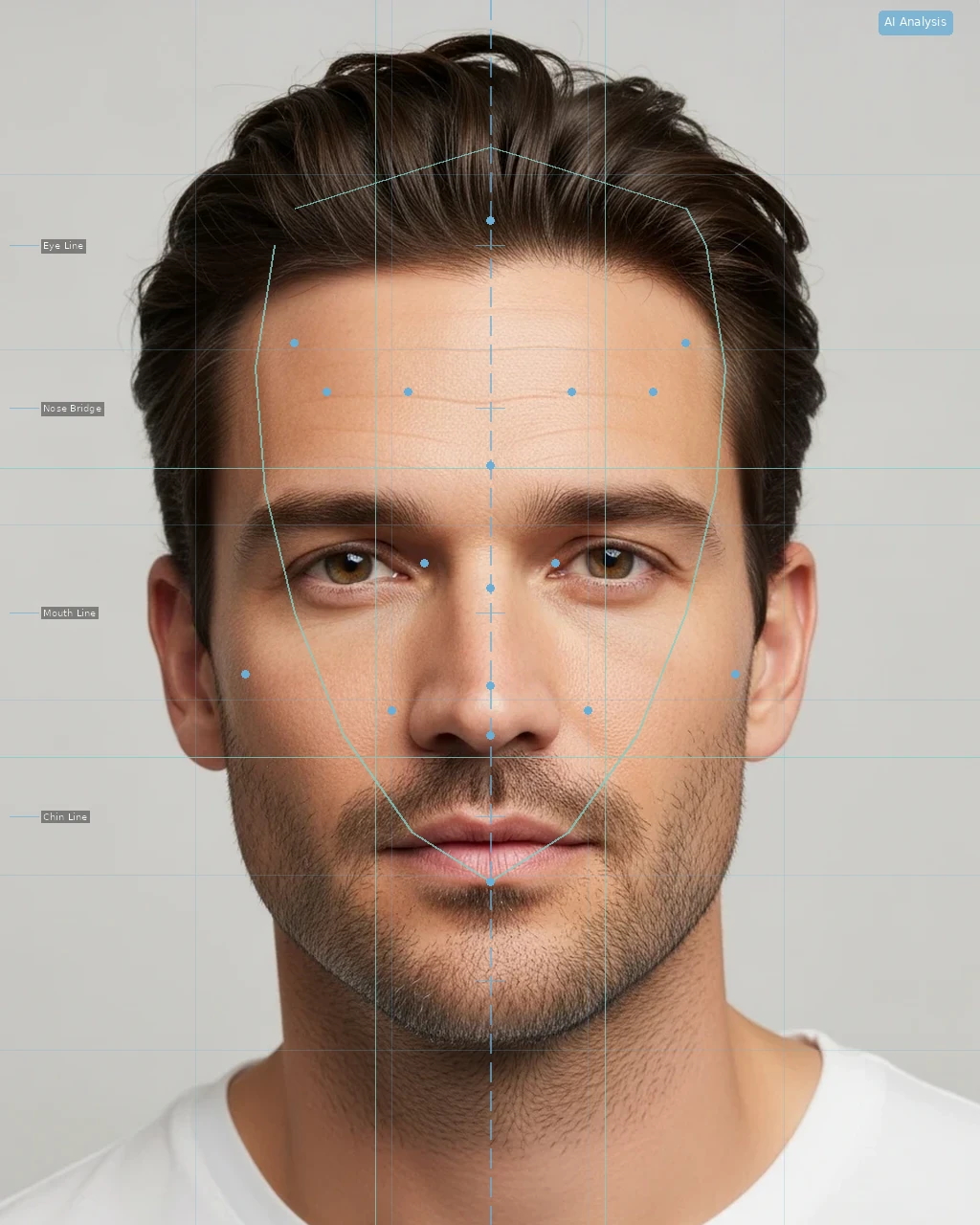
Face Age is designed to turn a simple facial photo into structured, science-informed insight in under 60 seconds. Rather than making vague claims, the system evaluates visible features using a consistent computer vision workflow that looks at 68 facial landmarks and interprets 12 age markers associated with skin quality, facial proportions, and visible aging patterns.
- Facial mapping. The system identifies 68 landmarks across the eyes, brow, nose, lips, jawline, cheeks, and forehead. This creates a stable geometric map for analysing symmetry, proportions, and regions where aging signs often emerge first.
- Marker analysis. It then evaluates 12 age-related features such as wrinkle-prone areas, skin texture variation, pigmentation irregularity, apparent elasticity cues, under-eye change, and overall skin evenness. These markers help estimate biological age and skin health trends linked to environmental stress, including possible digital aging skin patterns.
- Results and interpretation. You receive easy-to-read outputs such as biological age estimates, beauty metrics, and skin health indicators. If you want to understand how your current habits may be showing up on your face, trying Face Age gives you a fast baseline to track over time.
This is especially useful for people who suspect their routine, work environment, or screen habits may be affecting their skin but want a more objective starting point than a mirror alone can provide.
What You Will Discover
Blue light concerns are often discussed in broad terms, but what most people really want is a concrete answer: what is happening to my face right now, and what should I focus on first? Face Age translates visible skin patterns into practical outputs you can actually use.
Instead of relying on subjective impressions like “I look tired” or “my skin seems dull lately,” the analysis highlights measurable-looking indicators tied to aging and skin presentation. That makes it easier to connect lifestyle changes with visible outcomes.
- Estimated biological age. A facial age estimate based on visible markers rather than your birth year.
- Beauty score. A composite output informed by proportions, harmony, and facial presentation.
- Symmetry index. A structured look at how balanced facial features appear across the face.
- Skin health grade. A summary of visible texture, clarity, evenness, and age-related stress signs.
- Aging forecast. A directional view of where current patterns may lead if present habits continue.
- Regional insights. Signals from common stress areas such as the forehead, under-eye zone, cheeks, and perioral region.
- Change tracking. A way to compare future analyses after adjusting sunscreen use, sleep, skincare, or screen-light habits.
For someone researching blue light protection skin, these outputs help answer whether the bigger issue appears to be pigmentation, dehydration, emerging fine lines, or general loss of radiance. That clarity can make your skincare and prevention plan more targeted and realistic.
The Science Behind Blue Light Skin Damage
Blue light is part of high-energy visible light, usually discussed in the range of roughly 400 to 500 nanometers. Compared with UV radiation, its energy and biological effects are different, and that distinction matters. The evidence does not support treating ordinary screen exposure as equivalent to intense sun exposure. However, studies do suggest that visible light, including blue wavelengths, can affect the skin through reactive oxygen species, pigment pathways, and inflammatory signaling under certain conditions.
Work by researchers including Thierry Passeron and colleagues has helped clarify how visible light can aggravate pigmentation, especially in darker phototypes. In susceptible skin, visible light may induce longer-lasting hyperpigmentation than UV alone when exposure is sufficient. This is one reason dermatologists increasingly discuss tinted sunscreens with iron oxides for people dealing with melasma or post-inflammatory hyperpigmentation, since traditional sunscreens may be less protective against visible light.
Mechanistically, blue light appears capable of increasing oxidative stress and influencing opsin-related pathways in skin cells. A frequently discussed target is Opsin 3, which may participate in melanogenesis responses in melanocytes. While the field is still evolving, these findings help explain why HEV light skin concerns are taken seriously in dermatology, particularly in relation to pigment.
There is also interest in whether blue light contributes to collagen degradation indirectly through oxidative stress. Oxidative stress can disturb the balance between repair and damage, potentially influencing matrix metalloproteinases and other pathways linked with visible aging. For background on skin biology, see skin aging. For research examples, review this PubMed record on visible light and pigmentation: https://pubmed.ncbi.nlm.nih.gov/23211888/. Another helpful overview relates to oxidative stress in cutaneous aging: https://pubmed.ncbi.nlm.nih.gov/25774702/.
Computer vision adds a separate layer to this science. It does not “see” oxidative stress directly, but it can detect visible outcomes associated with cumulative exposure: tone irregularity, roughness patterns, loss of skin uniformity, fine line development, and shifts in perceived age. By standardising image analysis across many facial regions, AI can make subtle changes easier to track than casual observation alone.
The biggest scientific takeaway is balance. Evidence for screen light skin aging is stronger around pigmentation and oxidative stress than dramatic wrinkle formation from device use alone. In real life, blue light usually acts alongside UV exposure, indoor heating or air conditioning, poor sleep, stress, and inconsistent skincare. That is why skin assessment should focus on the total pattern rather than a single villain.
Key Factors That Influence Your Blue Light Skin Damage Profile
Not everyone responds to blue light in the same way. Your visible skin response depends on a mix of biology, environment, and routine. If you are trying to understand your own risk, it helps to look beyond device hours alone.
Genetics shape baseline collagen quality, pigment response, antioxidant capacity, and inflammatory tendencies. Some people naturally develop dark marks or uneven tone more easily than others.
Skin tone and pigment biology also matter. Medium to deeper complexions may be more prone to visible-light-induced hyperpigmentation, especially if melasma or post-acne marks are already present.
Lifestyle is a major amplifier. Poor sleep, smoking, high stress, alcohol excess, and nutrient-poor diets can weaken repair mechanisms and worsen the visible effects of any environmental exposure.
Environment matters too. Sunlight, urban pollution, heat, and dry indoor air often contribute more to aging than screens alone, but they can interact with visible light exposure.
Skincare habits influence outcomes every day.
- Broad-spectrum sunscreen reduces total light-related stress.
- Antioxidant serums may help support defence against oxidative damage.
- Barrier-supportive moisturisers improve resilience and hydration.
- Tinted products with iron oxides may help if pigmentation is your main concern.
If you want to see which of these factors may already be visible on your face, a quick analysis can provide a useful baseline before you change your routine.
Expert Tips to Improve Your Blue Light Skin Damage Profile
The good news is that if you are worried about blue light protection skin, the most effective strategy is not complicated. It is usually a smart blend of photoprotection, barrier support, and healthier recovery habits.
Start with daily sunscreen. A broad-spectrum formula is foundational because UV remains the larger aging threat. If your main issue is melasma or stubborn pigmentation, consider discussing a tinted sunscreen with iron oxides with a dermatologist, since visible light protection may be more relevant in that context.
Add antioxidant support. Topicals containing vitamin C, niacinamide, ferulic acid, resveratrol, or related antioxidants may help reduce oxidative stress. They are not magic shields, but they can strengthen an overall prevention routine.
Protect your skin barrier. Use a gentle cleanser, avoid over-exfoliating, and moisturise consistently. Skin that is dehydrated or irritated often looks older, duller, and less even regardless of the source of stress.
Support recovery through lifestyle:
- Sleep supports repair and reduces the tired, inflammatory look many people blame on screens alone.
- Hydration helps maintain skin comfort and surface smoothness.
- Nutrition rich in protein, colourful plants, and healthy fats supports collagen and antioxidant systems.
- Exercise improves circulation and may support healthier skin function over time.
- Screen habits still matter, especially late at night. Reducing brightness in dark rooms and taking breaks may help eye comfort and sleep quality, which indirectly affects skin.
For deeper evidence on aging markers, skin analysis, and related methodology, explore Face Age research. Then test your current baseline and re-check after a few weeks of consistent changes. That is often the best way to separate assumptions from visible progress.
AI Analysis vs Traditional Methods
Traditional skin assessment often relies on a mirror, product marketing claims, or occasional dermatologist visits. Each can be useful, but they have limits. Self-assessment is subjective, and in-clinic scoring may be accurate yet time-consuming, expensive, or hard to repeat regularly under the same conditions.
AI analysis offers a different advantage: speed, consistency, and structure. Face Age can assess visible facial features in under a minute, using the same landmark-based approach each time. That makes it easier to compare changes in symmetry, tone, texture, and apparent aging markers over time.
Dermatologists remain essential for diagnosing skin disease, melasma, rosacea, eczema, or suspicious lesions. But for routine tracking of visible aging and skin presentation, AI can fill the gap between expert visits. It provides a more objective snapshot than memory alone and can help you decide whether your current routine is actually working.
Your Privacy and Data Security
Privacy matters when facial images are involved. Face Age is built with a privacy-first approach so users can evaluate visible skin and aging markers without unnecessary data exposure.
Your photos are processed in-browser, which means analysis happens locally on your device rather than being permanently uploaded for storage. Images are not stored on servers, are deleted after analysis, and are not shared with third parties. The platform is designed with GDPR-compliant principles in mind, giving users greater transparency and control.
That allows you to explore concerns like blue light skin damage, pigmentation shifts, and aging patterns with more confidence and less friction.
Ready to Discover Your Blue Light Skin Damage Profile?
If you are wondering whether long workdays, indoor lighting, and cumulative exposure are showing up on your skin, the best next step is to get a clear baseline. Face Age helps translate visible signs like uneven tone, texture change, and emerging lines into structured insights you can actually use.
It is free to try, instant, and requires no signup for your first analysis. In under a minute, you can see how your skin presents today and start tracking what changes when you improve protection, sleep, hydration, and routine consistency.
You May Also Like
Sunscreen for Anti-Aging: What Most Miss — Learn how sunscreen for anti-aging helps prevent wrinkles and UV damage. See...
Skin Type Analyzer: What Your Face Reveals — Use our Skin Type Analyzer to learn what is my skin type, get tailored...
Wrinkle Detection AI: What Your Skin Reveals — Try wrinkle detection AI to assess fine lines, skin age, and symmetry in under...