What Skin Redness Analysis Really Reveals About Your Health
Skin redness analysis is not just about whether your face looks flushed in a photo. Redness often reflects how your skin barrier, superficial blood vessels, inflammatory pathways, and environmental exposures are interacting at a given moment. When redness becomes frequent, localized, or asymmetrical, it may signal patterns that deserve closer attention.
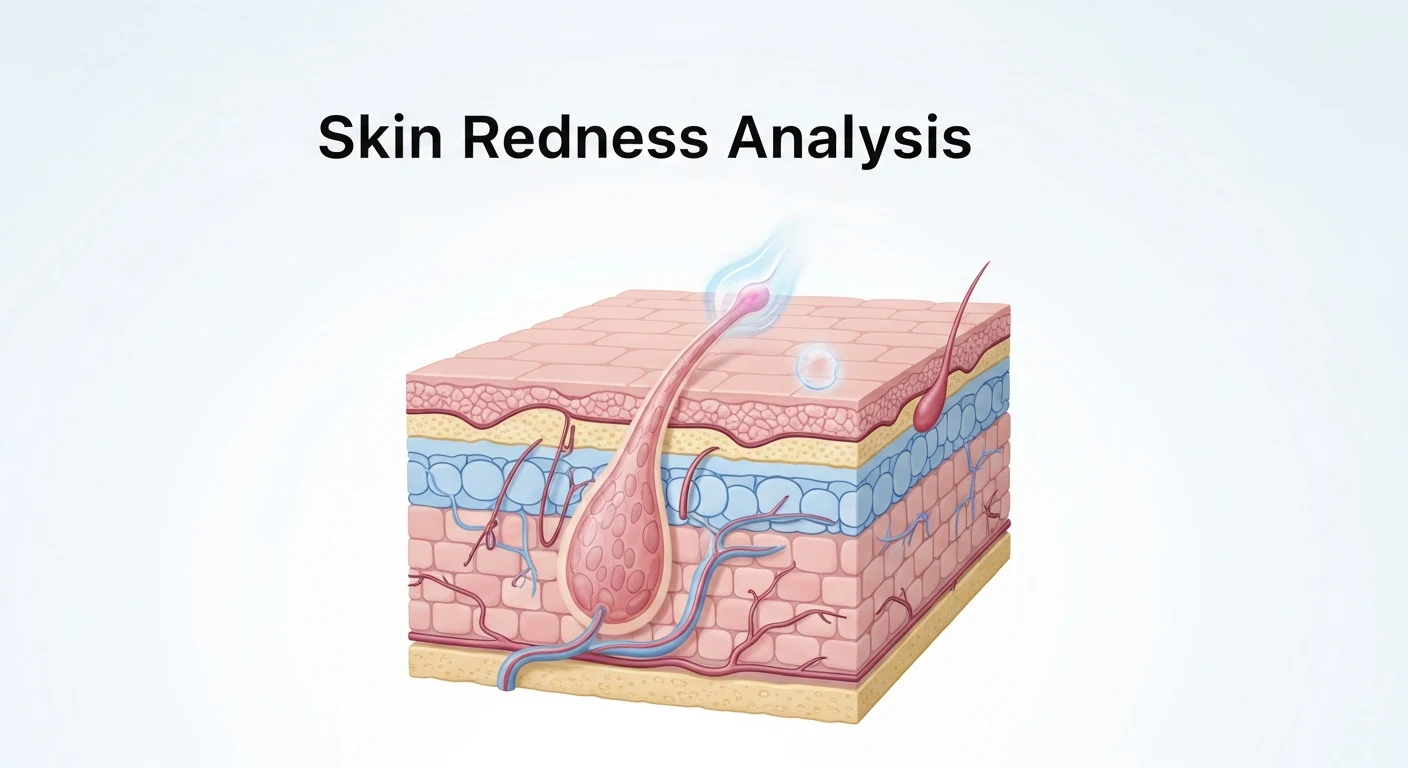
From a skin-health perspective, visible redness can be associated with irritation, sun damage, over-exfoliation, sensitivity, post-inflammatory change, or vascular conditions such as rosacea. The medical term erythema simply means redness caused by increased blood flow in superficial capillaries, but the reason behind that redness can vary widely.
That is why analysis matters. Looking carefully at where redness appears, how intense it is, and whether it stays consistent over time can provide clues about your skin’s tolerance and resilience.
- Diffuse redness may point to general sensitivity or barrier disruption.
- Cheek and nose redness can overlap with common rosacea patterns.
- Patchy redness may reflect irritation, friction, or post-breakout inflammation.
- Redness with uneven tone can affect both skin health grading and perceived skin age.
There is also an appearance dimension. Redness influences how even, calm, and youthful the skin appears because uniform skin tone is strongly linked with perceptions of health and attractiveness. In other words, a good facial redness checker is not only measuring color variation. It is helping connect visible skin tone patterns to hydration, irritation load, and long-term skin quality.
Used responsibly, redness analysis is a practical monitoring tool. It does not diagnose disease, but it can help you notice trends earlier, improve your skincare decisions, and know when professional evaluation may be worthwhile.
How Face Age's AI Analysis Works
Face Age turns a standard facial photo into a structured skin and appearance assessment in under 60 seconds. Rather than relying on a vague beauty filter or a generic camera effect, the system analyzes facial structure and visible skin signals using a repeatable computer-vision workflow.
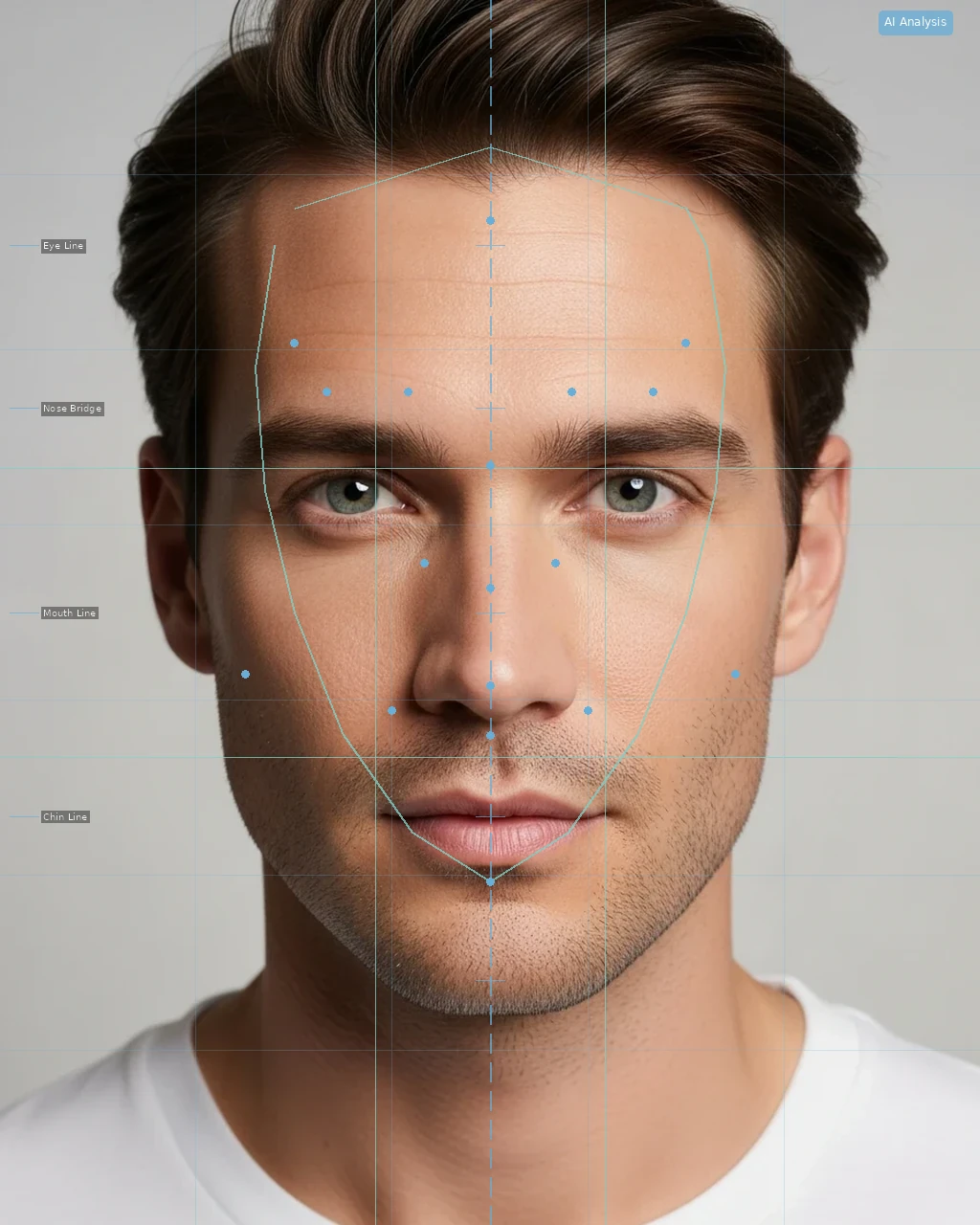
- Facial mapping: the system identifies 68 facial landmarks across the eyes, nose, mouth, jawline, cheeks, and brow region. These points help align the face and separate stable anatomy from temporary lighting or pose differences.
- Skin signal extraction: Face Age evaluates visible texture, tone distribution, wrinkle patterns, and color irregularities linked to 12 age markers and skin health indicators. This is where redness patterns, unevenness, and irritation-like distribution can be flagged as part of a broader complexion profile.
- Result generation: the platform summarizes your outputs into easy-to-read scores and visual insights, including biological age signals, symmetry information, and skin health grading. If you want a fast, privacy-first facial redness checker, this gives you a structured snapshot without needing special equipment.
The goal is not to replace a dermatologist. It is to give you a clearer baseline. If you are trying to understand whether your redness is stable, worsening, or responding to routine changes, Face Age offers a simple way to start tracking visible patterns. You can also explore the scientific background at Face Age research.
What You Will Discover
A well-designed skin redness analysis should do more than tell you that your face looks red. It should place redness inside the broader context of aging, symmetry, skin quality, and overall facial presentation. That is what makes the results more actionable.
With Face Age, your report can help you understand how visible redness interacts with other appearance and skin-health dimensions. This is especially useful if you are comparing photos over time or trying to understand whether a new product, climate change, or lifestyle shift is helping.
- Biological age estimate: how visible skin features align with age-related facial markers.
- Beauty score: a composite assessment influenced by harmony, balance, and skin presentation.
- Symmetry index: how evenly facial landmarks align from left to right.
- Skin health grade: a broad view of clarity, tone evenness, texture, and visible stress signals.
- Redness pattern insight: whether facial redness appears diffuse, localized, or unevenly distributed.
- Aging forecast cues: where current skin patterns may influence future visible aging if left unmanaged.
- Complexion evenness signals: how redness, dullness, and discoloration affect uniformity.
- Tracking potential: a repeatable framework for comparing changes after skincare or lifestyle adjustments.
This matters because redness rarely exists in isolation. Someone with mild cheek flushing may also show signs of dehydration or irritation. Another person may have excellent texture but persistent vascular redness around the nose. A structured analysis helps separate these layers.
For users searching for a rosacea detector or inflammation analyzer, the most useful outcome is often not a label. It is a more objective picture of what your skin is doing today and what deserves monitoring next.
The Science Behind Skin Redness Analysis
Facial redness is a visible output of several biological processes, most notably vasodilation, inflammatory signaling, and barrier disruption. In dermatology, redness is often discussed in the context of erythema, sensitive skin, contact irritation, acne-related inflammation, and rosacea. Researchers studying rosacea, including Dr. Frank C. Powell and other dermatology specialists, have emphasized that facial redness can arise from both vascular instability and inflammatory cascades rather than a single simple cause.
Rosacea itself is a useful example because it often involves persistent centrofacial redness, visible vessels, flushing, and heightened reactivity. The overview at Wikipedia's rosacea article summarizes these common features, while dermatology literature explores mechanisms involving neurovascular dysregulation, immune activity, and skin barrier abnormalities.
Peer-reviewed work also supports the idea that image-based analysis can help detect and quantify skin color variation more consistently than casual self-observation. In digital dermatology and computer vision, standardized facial photography allows algorithms to measure regional color distribution, contrast, and pattern density. Studies published in biomedical imaging and skin assessment fields have shown that computational methods can improve repeatability when evaluating tone irregularity and inflammatory appearance.
For medical background, the National Rosacea Society Expert Committee publication indexed at PubMed helped shape the clinical classification of rosacea, while broader discussions of pathophysiology are covered in articles such as this PubMed review. These sources support an important point: visible redness is biologically meaningful, even if a photo alone cannot provide a diagnosis.
Computer vision adds another layer. By mapping the face and controlling for geometric differences through landmark detection, software can compare similar regions across cheeks, nose, forehead, and chin. That makes it possible to detect whether redness is concentrated in classic high-reactivity zones or spread more broadly. When combined with skin texture and tone analysis, this becomes more informative than a mirror check.
Still, responsible interpretation matters. Lighting, camera white balance, exercise, alcohol, temperature, and recent product use can all temporarily alter redness. The scientific value of a facial redness checker comes from consistency: same angle, similar lighting, repeated measurements, and trend analysis over time. In that context, AI-supported skin redness analysis becomes a useful observational tool grounded in real dermatology and image science.
Key Factors That Influence Your Skin Redness
Skin redness is shaped by a combination of biology and behavior. Some factors are difficult to change, such as baseline vascular reactivity or inherited skin sensitivity. Others are highly modifiable and often explain why redness seems to flare without warning.
Genetics play a role in skin tone, barrier strength, inflammatory tendency, and conditions like rosacea. Fairer phototypes may show redness more visibly, but all skin tones can experience inflammation and vascular flushing.
Lifestyle triggers are common. Alcohol, spicy food, heat exposure, intense exercise, poor sleep, emotional stress, and smoking can all increase flushing or worsen inflammatory appearance. Even frequent hot showers can aggravate reactive skin in some people.
Environmental exposure matters too. Ultraviolet radiation, wind, cold air, pollution, and indoor heating can all stress the skin barrier. Over time, repeated exposure may contribute to persistent redness and uneven tone.
Skincare habits are another major factor. Over-cleansing, abrasive scrubs, high-strength acids, retinoids introduced too quickly, and fragranced products can increase irritation. In contrast, a simpler routine often helps calm a red, reactive complexion.
- Sun exposure can worsen vascular and inflammatory redness.
- Barrier damage increases reactivity to otherwise tolerable products.
- Stress and sleep loss may intensify inflammatory signaling.
- Seasonal changes can alter hydration and visible redness patterns.
This is where regular tracking is useful. If you use Face Age as an inflammation analyzer over several weeks, you may notice that your redness is not random at all. It may follow specific triggers, product changes, or recovery habits. That kind of pattern recognition can make your skincare much more precise.
Expert Tips to Improve Your Skin Redness
Improving visible redness usually starts with reducing avoidable irritation and supporting the skin barrier. The most effective approach is rarely dramatic. It is consistent, gentle, and evidence-informed.
First, use broad-spectrum sunscreen every day. UV exposure can worsen inflammation, visible vessels, and post-inflammatory color change. A fragrance-free mineral or sensitive-skin formula is often better tolerated by reactive complexions.
Second, simplify your routine. Choose a mild cleanser, a barrier-supportive moisturizer, and introduce actives slowly. Ingredients such as ceramides, glycerin, niacinamide, and colloidal oatmeal are commonly used to support calmer skin, though tolerance varies by individual.
Third, pay attention to systemic habits. Sleep, hydration, nutrition, and regular exercise affect inflammatory tone and recovery capacity. Exercise is beneficial overall, but if high heat workouts trigger flushing, try cooler conditions or shorter sessions with gradual intensity.
- Wear sunscreen daily and reapply when outdoors.
- Avoid over-exfoliating and harsh physical scrubs.
- Patch test new products before full-face use.
- Use lukewarm, not hot, water when cleansing.
- Track food, stress, and climate triggers.
- Prioritize sleep consistency and recovery.
If redness is persistent, burning, or associated with bumps, a clinician can help rule out conditions such as rosacea, seborrheic dermatitis, or contact dermatitis. Face Age should be viewed as a monitoring tool, not a diagnosis engine.
For readers who want to make data-driven changes, use the platform regularly and compare your results under similar conditions. You can also review supporting information at https://face-age.net/research. When paired with good habits, a consistent facial redness checker can help you see whether your routine is actually calming your skin.
AI Analysis vs Traditional Methods
Traditional redness assessment often depends on memory, mirror checks, or occasional dermatologist visits. Those methods can be helpful, but they are not always consistent. Lighting changes, stress, and subjective perception can make it hard to judge whether your skin is truly improving.
Manual scoring by a clinician may be more structured, but it still requires an appointment and usually captures only one moment in time. In contrast, Face Age offers an instant, repeatable way to review visible redness patterns from home. Its landmark-based analysis helps standardize the face before evaluating tone and texture signals.
This does not mean AI is superior in every situation. A dermatologist can diagnose disease, prescribe treatment, and examine symptoms a photo cannot capture. But for routine tracking, an AI-powered facial redness checker can be faster, more convenient, and more objective than casual self-assessment. The strongest approach is often both: regular monitoring at home and professional care when symptoms are persistent or worsening.
Your Privacy and Data Security
Face Age is designed with privacy first. Photos are processed in-browser, which means the analysis happens locally on your device rather than being uploaded for storage on remote servers whenever this mode is supported. Images are not kept longer than necessary for analysis and are deleted after processing.
Your photo is never sold or shared with third parties for advertising purposes. The platform follows GDPR-aligned privacy principles and aims to minimize data exposure at every step. For users who want a skin redness analysis without sacrificing control over personal images, that matters just as much as speed or convenience.
Ready to Discover Your Skin Redness?
Skin redness can reflect sensitivity, inflammation, barrier stress, or long-term exposure patterns. Understanding it clearly can help you choose better products, spot triggers faster, and track whether your skin is moving in the right direction.
Face Age gives you a free, instant, no-signup starting point. In less than a minute, you can review redness patterns alongside biological age markers, symmetry, and skin health indicators. If you want a smarter way to monitor your complexion, try Face Age and see what your skin is telling you today.
You May Also Like
Sunscreen for Anti-Aging: What Most Miss — Learn how sunscreen for anti-aging helps prevent wrinkles and UV damage. See...
Skin Type Analyzer: What Your Face Reveals — Use our Skin Type Analyzer to learn what is my skin type, get tailored...
Collagen Supplements for Skin: Do They Really Work? — Collagen supplements for skin may support hydration and elasticity. Learn the...