What Collagen Level Testing Really Reveals About Your Health
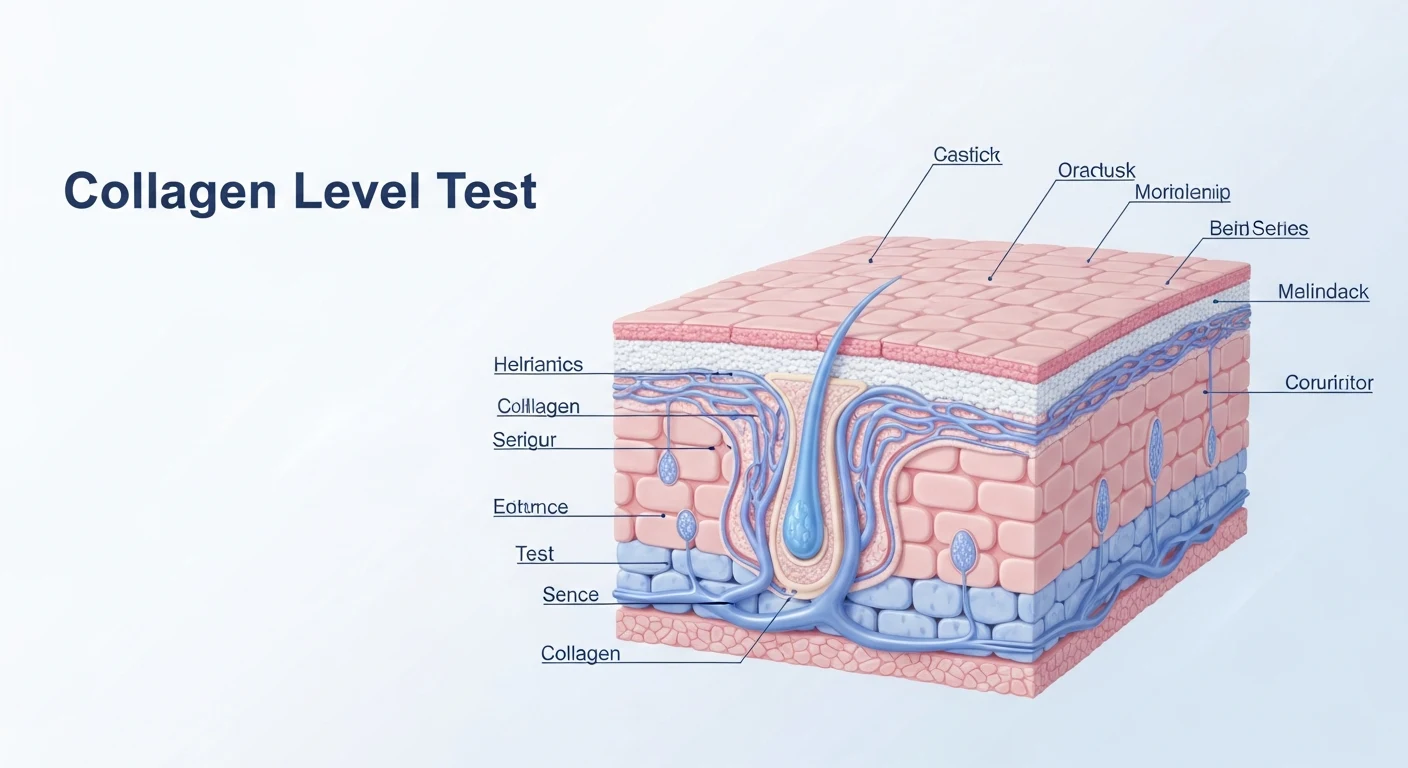
A collagen level test is not just about beauty. It is really a window into how well your skin is maintaining its structural framework. Collagen is the main protein in the skin's dermis, where it helps support firmness, tensile strength, and resilience. When collagen quality declines, the skin may look thinner, less elastic, and more uneven, even before deeper wrinkles become obvious.
From a skin science perspective, visible collagen-related changes often overlap with other markers of biological aging. Reduced elasticity, creasing at rest, slower rebound after facial movement, and texture roughness can all suggest that the dermal matrix is changing. These features do not diagnose a medical condition, but they can help indicate whether your skin is aging faster or slower than expected for your chronological age.
Collagen also matters because it interacts with other systems in the skin. It works alongside elastin, hydration balance, barrier function, and pigmentation patterns. A low firmness signal may not come from collagen alone, but collagen status is usually part of the picture. For readers who want a primer, see Wikipedia's overview of collagen.
- Firmness: How well skin resists sagging and maintains contour.
- Elasticity: How quickly skin appears to recover from movement and deformation.
- Texture: Micro-roughness can increase as structural proteins decline.
- Wrinkle formation: Fine lines often become more persistent with lower dermal support.
In short, a collagen production check can reveal much more than whether your skin looks youthful. It can help you understand the condition of the support network beneath the surface and whether your current habits are protecting or accelerating age-related change.
How Face Age's AI Analysis Works
Face Age is designed to turn visible skin and facial structure signals into a practical collagen-related assessment without requiring a clinic visit. Instead of claiming to measure collagen molecules directly, it evaluates surface and structural markers that often track with collagen integrity, elasticity, and age-related tissue change.
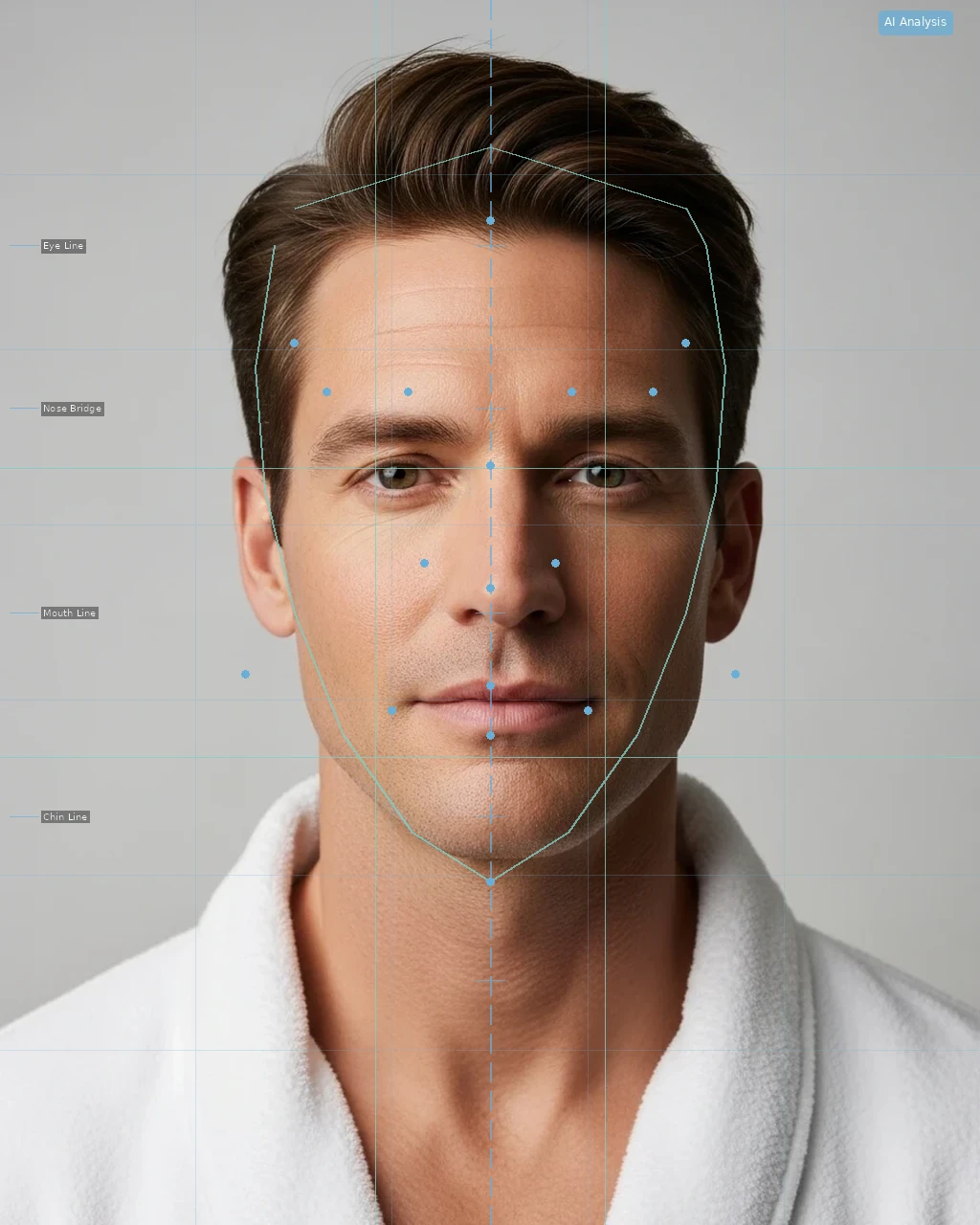
Step 1: Facial mapping. The system identifies 68 facial landmarks across the eyes, nose, mouth, jawline, forehead, and cheek contours. These points help standardise the face, correct for angle, and create a consistent frame for skin and proportion analysis.
Step 2: Age-marker analysis. Face Age evaluates 12 age markers, including fine lines, wrinkle depth patterns, texture irregularity, under-eye changes, contour shifts, and skin evenness. Together, these signals act as a digital skin elasticity test and firmness analyzer informed by visible biology.
Step 3: Instant results. In under 60 seconds, you receive a report that translates those features into biological age, skin health outputs, and appearance metrics. If you want a quick collagen production check before changing skincare, supplements, or daily habits, this gives you a fast baseline. You can try it now and compare future photos to monitor change over time.
The key advantage is consistency. Human impressions vary, but standardised landmark analysis lets you track whether your skin appears firmer, smoother, and more resilient across time using the same framework.
What You Will Discover
A good collagen level test should leave you with something more useful than a vague score. Face Age is built to provide a broader picture of how collagen-related changes fit into overall skin aging and facial appearance. That means your results connect firmness and elasticity cues to other metrics that matter in everyday life.
Instead of isolating one feature, the report helps you understand how your skin is performing as a system. This matters because collagen decline often shows up alongside changes in hydration, clarity, symmetry, and tissue support.
Estimated biological age: A comparison between your visible age markers and expected patterns across age groups.
Beauty score: A summary metric based on harmony, skin quality, and facial proportions.
Symmetry index: An assessment of left-right balance across major facial landmarks.
Skin health grade: A practical overview of texture, evenness, clarity, and visible signs of stress.
Aging forecast: An estimate of which features may become more noticeable if current trends continue.
Firmness-related cues: Visual evidence linked to contour support, line formation, and elasticity loss.
Personal baseline: A reference point you can use to compare future analyses after skincare, lifestyle, or seasonal changes.
For someone deciding whether to invest in retinoids, sunscreen improvements, in-office procedures, or collagen-supportive habits, these outputs make the analysis actionable. You are not just seeing whether your skin looks older. You are seeing which visible markers may be driving that result.
The Science Behind Collagen Level Testing
Collagen biology is well studied in dermatology. The skin's dermis contains a matrix rich in type I and type III collagen, produced mainly by fibroblasts. With intrinsic aging and chronic ultraviolet exposure, collagen synthesis tends to decline while collagen breakdown rises. Much of this breakdown is driven by matrix metalloproteinases, enzymes that increase after UV exposure and inflammation. Pioneering work by researchers including John J. Voorhees and Gary J. Fisher helped clarify how photoaging disrupts collagen homeostasis and contributes to wrinkles and laxity.
One reason a visible collagen level test makes sense is that collagen loss changes measurable surface features. As dermal support weakens, the skin can show altered topography, deeper rhytids, lower elasticity, and reduced recoil. Those features are not perfect proxies for collagen concentration, but they are clinically relevant. In aesthetic dermatology, physicians often use visual grading scales, pinch tests, and imaging systems to assess the same broad phenomena from different angles.
Computer vision extends that logic. If a system can reliably detect wrinkle patterns, pore visibility, contour drift, pigmentation irregularity, and texture roughness, it can estimate the visible consequences of collagen decline. This is similar in principle to how image analysis is used in dermatologic research to quantify age-related change. You can explore background on skin aging and the role of matrix metalloproteinases in photoaging.
There is also a strong rationale for combining structural and skin-surface features. Collagen decline does not happen in isolation. It interacts with elastin fragmentation, glycation, chronic sun exposure, barrier stress, and hydration changes. A pure wrinkle count can miss this broader picture, while a facial landmark model plus skin texture analysis captures both geometry and surface quality.
Face Age therefore treats collagen level testing as a multi-signal problem. It analyses 68 facial landmarks to standardise facial geometry, then overlays age-marker detection for texture, wrinkles, contour integrity, and skin evenness. In effect, it functions as a digital firmness analyzer built on visible biomarkers rather than a laboratory assay. This approach is especially useful for tracking trends. If your photo conditions are reasonably consistent, repeated analyses can show whether your skin is appearing smoother, firmer, and biologically younger over time.
For readers interested in the broader molecular picture, the review literature on skin aging and dermal extracellular matrix change gives important context. The key takeaway is simple: while a selfie cannot directly count collagen fibers, visible skin behavior often reflects the underlying matrix strongly enough to guide practical decisions.
Key Factors That Influence Your Collagen Level
If your collagen level test suggests lower firmness or elasticity than expected, the cause is rarely one thing. Collagen status is shaped by genetics, age, and long-term exposures, but daily habits matter too. That is why a collagen production check is most useful when it leads to behaviour change, not just curiosity.
Genetics: Some people naturally maintain firmer skin longer, while others develop laxity or wrinkling earlier.
Sun exposure: Ultraviolet radiation is one of the strongest external drivers of collagen breakdown and visible photoaging.
Smoking and pollution: Oxidative stress can accelerate matrix damage and dullness.
Sleep and stress: Poor recovery may worsen inflammation and skin repair capacity.
Nutrition: Protein intake, vitamin C status, and overall dietary quality support collagen synthesis pathways.
Skincare routine: Consistent sunscreen and evidence-based actives can help protect or stimulate collagen-related improvement.
Hormonal changes, weight fluctuations, and repeated tanning can also affect perceived firmness. Even dehydration can briefly exaggerate fine lines and make skin look less resilient than it really is. This is why one analysis should be treated as a snapshot, not a permanent label.
If you want a practical starting point, take a baseline test with Face Age, then repeat it after improving one or two high-impact habits. That is often the clearest way to see whether your skin is responding.
Expert Tips to Improve Your Collagen Level
You cannot stop intrinsic aging, but you can influence how quickly visible collagen-related changes appear. The most effective strategy is not a miracle product. It is a stack of small, evidence-based habits that protect the dermis and support repair.
Use broad-spectrum sunscreen every day: Daily UV protection is one of the most reliable ways to reduce collagen breakdown over time.
Consider topical retinoids: Retinoids have some of the best evidence for improving fine lines and supporting dermal remodeling when tolerated well.
Prioritise sleep: Skin repair processes benefit from consistent, high-quality sleep.
Eat for skin structure: Adequate protein, vitamin C, zinc, and antioxidant-rich foods support collagen synthesis and reduce oxidative stress.
Stay physically active: Regular exercise supports circulation and overall metabolic health, which can influence skin quality.
Avoid smoking: Tobacco use is strongly associated with premature wrinkling and poorer skin resilience.
Support hydration: Well-hydrated skin often looks smoother and shows less temporary creasing.
Be cautious with products that promise to “replace” lost collagen overnight. Most improvements come from protecting existing collagen, reducing breakdown, and supporting gradual remodeling. In-office procedures may help in some cases, but they work best when built on strong daily habits.
If you want to go deeper into the evidence, explore the scientific resources at Face Age Research. Then use your analysis as a feedback tool. Repeating the test over time can help you see whether your skincare and lifestyle changes are translating into visible gains in firmness, texture, and biological age.
AI Analysis vs Traditional Methods
Traditional collagen assessment usually falls into one of three categories: a dermatologist's visual evaluation, device-based imaging in a clinic, or subjective self-assessment in the mirror. Each has value, but each also has limitations. Clinical visits take time, advanced imaging may be expensive, and self-judgment is often inconsistent.
Face Age offers a faster middle ground. It does not replace a medical evaluation, but it gives you an instant, standardised visual analysis from a photo. Instead of relying on memory or opinion, it quantifies visible aging signals using 68 landmarks and multiple skin-age markers.
For transactional users, the advantage is clear: you can run a collagen production check in under a minute before buying skincare, booking treatment, or changing your routine. That makes it easier to make decisions based on tracked evidence rather than guesswork alone.
Your Privacy and Data Security
Privacy matters when you upload a face photo. Face Age is designed with a privacy-first workflow: photos are processed in-browser, not stored on servers for later use. After analysis, images are deleted immediately, and your data is not shared with third parties for advertising or resale.
The platform is also built around GDPR-aware principles, including data minimisation and clear purpose limitation. In practical terms, that means your image is used to generate your result, not to build a hidden profile about you. For a collagen level test, that matters just as much as speed or convenience.
Ready to Discover Your Collagen Level?
If you want a fast, evidence-informed way to check visible firmness, elasticity, and age-related skin change, Face Age gives you a simple starting point. In under 60 seconds, you can get a collagen-related skin analysis, biological age estimate, and practical baseline without booking a clinic visit.
There is no complicated setup, no waiting, and no need to guess whether your current routine is helping. Try Face Age now for a free, instant, no-signup first analysis and see what your skin is already saying about collagen, resilience, and future aging.
You May Also Like
Skin Type Analyzer: What Your Face Reveals — Use our Skin Type Analyzer to learn what is my skin type, get tailored...
Sunscreen for Anti-Aging: What Most Miss — Learn how sunscreen for anti-aging helps prevent wrinkles and UV damage. See...
Skin Barrier Health Test: What Your Face Reveals — Take a skin barrier health test to spot dryness, irritation risk, and skin...