What Collagen Supplements for Skin Really Reveal About Your Health
Skin is more than a cosmetic surface. It is a biologically active organ that reflects hydration status, inflammation, cumulative sun exposure, sleep quality, nutrition, and age-related structural change. When people search for collagen anti-aging solutions, they are usually responding to visible cues such as laxity, roughness, or wrinkles, but those signs often reveal a broader picture of skin resilience and connective tissue support.
Collagen is the most abundant protein in the human body and a major component of the dermis, where it contributes to tensile strength and structural integrity. With age, collagen synthesis slows and degradation increases, especially under the influence of ultraviolet radiation, smoking, and chronic oxidative stress. This process is closely related to what dermatologists call photoaging and intrinsic aging. For a broader overview, see Wikipedia’s article on collagen.
What makes this relevant to health is that visible skin change can act as a practical external marker of internal and environmental stressors. While a supplement cannot diagnose disease, the state of your skin may help highlight patterns worth addressing.
- Lower elasticity can reflect reduced dermal support and long-term collagen breakdown.
- Dryness and rough texture may point to barrier disruption, low hydration, or inadequate skincare.
- Uneven tone can signal sun damage and inflammatory exposure over time.
- Accelerated wrinkle formation may be influenced by genetics, UV exposure, smoking, and sleep quality.
That is why evaluating skin changes visually and consistently matters. A supplement may be one part of the picture, but the most useful question is not “Did I buy the best collagen for skin?” It is “What does my skin currently show about my biology, and how can I track meaningful improvement?”
How Face Age's AI Analysis Works
If you are taking collagen or considering it, it helps to measure your skin before relying on memory or marketing claims. Face Age uses computer vision to assess visible age and skin quality signals in a simple process that takes under 60 seconds. Rather than giving a vague beauty filter effect, the system examines structured facial information and returns interpretable results.
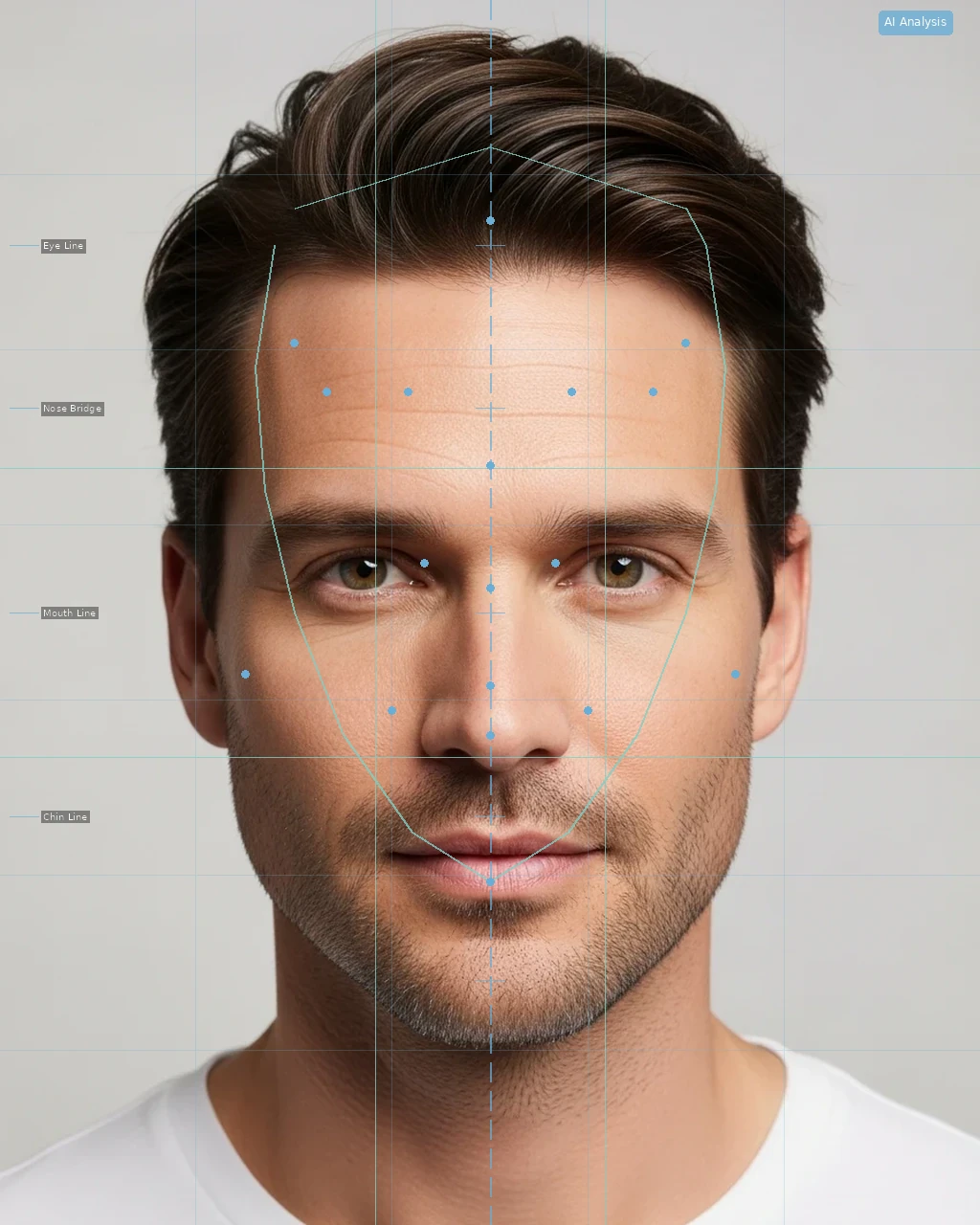
- Image capture and landmark mapping. After you upload or take a clear face photo, the system analyses 68 facial landmarks to map core regions such as the eyes, cheeks, jawline, forehead, nose, and mouth. This creates a standardized framework for comparing proportions and visible age cues.
- Age-marker and skin-feature analysis. The model evaluates 12 age markers, including wrinkle-prone areas, surface texture variation, elasticity-related contours, and signs linked to hydration and skin evenness. This helps translate visible skin condition into measurable outputs.
- Result generation and interpretation. Within a minute, you receive a biological age estimate, beauty-related indicators, and skin health signals that can help you track whether your routine, including collagen peptides, appears to be making a visible difference over time.
This is especially useful when testing lifestyle changes because subtle shifts are easy to miss day to day. If you want a faster way to benchmark your skin before and after a routine change, Face Age gives you a repeatable starting point without the friction of booking a clinic visit.
What You Will Discover
When people try collagen supplements, they often focus on a single hope such as fewer wrinkles. In reality, visible skin aging is multidimensional. Face Age is designed to show a broader view so you can understand whether changes in your appearance relate more to texture, symmetry, hydration signals, or overall age presentation.
That wider lens matters because collagen skin benefits are usually modest and gradual. A better assessment framework can help you separate genuine progress from wishful thinking, especially if you are comparing different products marketed as the best collagen for skin.
- Biological age estimate: An AI-based view of how old your face appears relative to visible age markers such as fine lines, skin texture, and firmness-related patterns.
- Beauty score: A composite measure informed by facial proportions, harmony, and balance rather than subjective opinion alone.
- Symmetry index: An analysis of facial alignment and proportional correspondence between the left and right sides.
- Skin health grade: A summary of visible skin condition, including clarity, tone evenness, texture quality, and hydration-related cues.
- Aging forecast: An estimate of how current visible patterns may influence future age appearance if lifestyle and skincare habits remain unchanged.
These outputs do not replace a dermatologist, but they can make self-tracking far more objective. If you are using collagen consistently for 8 to 12 weeks, repeating the same analysis conditions can give you a clearer sense of whether your skin presentation is changing in a measurable way.
The Science Behind Collagen Supplements for Skin
Collagen in skin is primarily found in the dermis, where it forms a structural network that supports strength and elasticity. Aging reduces collagen production while increasing fragmentation of existing collagen fibers. This process has been studied extensively in dermatology, including landmark work by researchers such as Dr. John J. Voorhees and Dr. Gary J. Fisher, who helped clarify how ultraviolet exposure accelerates collagen breakdown through matrix metalloproteinases and other pathways.
Supplement research usually focuses on hydrolyzed collagen, also called collagen peptides. These are collagen proteins broken into smaller peptides that are easier to digest. After ingestion, the body breaks them down further into amino acids and small peptide fragments, some of which may influence fibroblast activity, extracellular matrix production, and skin hydration. For background on the skin’s structure, see Wikipedia’s article on human skin.
A growing number of randomized controlled trials and reviews suggest that oral collagen supplementation may improve skin hydration, elasticity, and wrinkle appearance in some adults. One commonly cited systematic review is available on PubMed at https://pubmed.ncbi.nlm.nih.gov/33742704/. Another review examining oral collagen and skin outcomes can be found at https://pubmed.ncbi.nlm.nih.gov/30681787/. Overall, the literature is promising, but not all studies are equally strong. Sample sizes are often modest, intervention periods can be short, and some trials are industry-funded.
The practical conclusion is balanced. There is credible evidence that certain collagen peptides skin supplements can provide measurable benefits, particularly for hydration and elasticity, after consistent use over several weeks. However, effect sizes are not dramatic, and outcomes vary. Supplements also work best in a supportive context that includes sun protection, adequate protein intake, sleep, and a skincare routine that protects the skin barrier.
In other words, collagen anti-aging strategies should be viewed as additive, not transformational. The science is encouraging enough to take seriously, but not strong enough to justify unrealistic promises. That is why objective visual tracking remains so valuable when you are deciding whether a product is worth continuing.
Key Factors That Influence Your Collagen-Related Skin Results
Even if two people take the same supplement, they may see very different outcomes. That is because skin aging and collagen metabolism are influenced by a network of internal and external factors. Supplements can support the process, but they do not erase the effects of environment and behavior.
Genetics plays a role in baseline skin thickness, elasticity, facial structure, and wrinkle tendency. Some people naturally maintain firmer-looking skin for longer, while others develop visible lines earlier despite good habits.
Ultraviolet exposure is one of the most important variables. Chronic sun exposure accelerates collagen degradation and contributes to uneven pigmentation, roughness, and laxity. No collagen powder can fully compensate for repeated UV damage.
Lifestyle habits also matter. Smoking increases oxidative stress and impairs skin structure. Poor sleep can worsen inflammation and dullness. Low overall protein intake may limit the raw materials needed for tissue maintenance. High-sugar diets may contribute to glycation, a process associated with stiffer, less resilient collagen.
Skincare and barrier support affect what you see externally. Retinoids, moisturizers, antioxidants, and sunscreen can improve the skin environment in ways that make any supplement results more noticeable. If you want to assess whether your routine is helping, an AI baseline can be useful before and after consistent changes. Face Age makes that kind of tracking fast enough to use regularly, rather than only when you remember to compare old photos.
Expert Tips to Improve Your Collagen-Related Skin Results
If your goal is healthier, firmer-looking skin, the smartest approach is to combine supplementation with evidence-based daily habits. Think of collagen supplements as one tool in a broader skin-support strategy, not the entire plan.
- Use sunscreen every day. Broad-spectrum SPF is the most reliable way to reduce collagen breakdown from ultraviolet radiation. Daily protection does more for long-term skin aging than almost any supplement.
- Prioritize protein and vitamin C. Collagen synthesis depends on amino acids, while vitamin C is essential for collagen formation. A supplement cannot outwork a chronically poor diet.
- Protect sleep quality. Skin repair is strongly linked to recovery and circadian rhythm. Aim for consistent, adequate sleep rather than occasional catch-up nights.
- Stay hydrated and support the barrier. Hydration affects how plump and smooth skin looks. Use a gentle cleanser and a moisturizer that helps reduce water loss.
- Consider retinoids and antioxidants. Topical retinoids have strong evidence for improving photoaged skin, while antioxidants can help limit oxidative stress.
- Exercise regularly. Movement supports circulation, metabolic health, and stress regulation, all of which influence skin appearance indirectly.
If you decide to test collagen, stay consistent for at least 8 to 12 weeks and avoid changing ten other variables at the same time. Measure your starting point, then reassess under similar lighting and photo conditions. For more science-based context, browse Face Age research resources and use the platform to monitor visible changes rather than guessing from memory.
AI Analysis vs Traditional Methods
Traditionally, evaluating skin aging meant either looking in the mirror, comparing inconsistent photos, or booking a professional assessment. Each approach has limitations. Mirrors are subjective, casual photos vary in lighting and angle, and clinic visits can be expensive or infrequent.
Face Age offers a practical middle ground. Instead of relying only on personal impression, it applies a structured visual analysis using facial landmarks and multiple age-related indicators. This can make short-term tracking easier when you are testing interventions like collagen supplements for skin.
That does not mean AI replaces dermatology. A dermatologist can diagnose skin disease, recommend prescription treatments, and examine concerns such as rashes, lesions, or severe pigmentation. But for routine monitoring of visible aging patterns, manual self-assessment is often inconsistent. AI analysis provides a faster, more repeatable benchmark that can complement, not replace, traditional care.
Your Privacy and Data Security
Facial analysis should not come at the cost of your privacy. Face Age is designed with a privacy-first approach so you can assess your skin without worrying about your image being used elsewhere.
Your photo is processed in-browser, which means the analysis happens locally on your device rather than being permanently uploaded and stored on remote servers. Images are not retained after analysis, are not shared with third parties, and are handled in line with GDPR compliance principles.
That matters when you are working with sensitive biometric information. You get useful skin and age insights without creating a long-term photo archive you did not ask for.
Ready to Discover Your Collagen-Related Skin Baseline?
Collagen supplements may offer real benefits for hydration, elasticity, and wrinkle appearance, but the best results come from realistic expectations and consistent tracking. Instead of relying on marketing claims alone, check what your skin is showing right now.
Face Age lets you analyse visible age markers, skin quality, and facial harmony in under a minute, with no complicated setup. It is a simple way to create a baseline before trying a new routine and to see whether your efforts appear to be moving in the right direction. Try Face Age now to get an instant, privacy-first snapshot of your skin aging profile.
You May Also Like
Skin Type Analyzer: What Your Face Reveals — Use our Skin Type Analyzer to learn what is my skin type, get tailored...
Skin Texture Analysis: What Your Face Reveals — Get a skin texture analysis to measure smoothness, surface irregularity, and...
Sunscreen for Anti-Aging: What Most Miss — Learn how sunscreen for anti-aging helps prevent wrinkles and UV damage. See...