What Anti Aging Progress Tracking Really Reveals About Your Health
An anti aging progress tracker is not just about appearance. When used consistently, it can reveal visible patterns linked to skin integrity, cumulative environmental stress, and everyday habits. Your face is one of the most information-rich surfaces on the body, reflecting changes in hydration, pigmentation, elasticity, and structural support. Those features are influenced by age, but also by sleep, UV exposure, smoking, nutrition, and inflammation.
From a biological perspective, skin aging is shaped by both intrinsic aging and extrinsic aging. Intrinsic aging refers to the natural passage of time, while extrinsic aging is driven by outside factors, especially sunlight and pollution. Dermatologists often use the term skin aging to describe this combined process. That matters because two people of the same chronological age can show very different visible age signatures.
A well-designed tracker helps you monitor changes such as:
- Fine lines and wrinkle depth, which can reflect collagen loss and repeated facial movement.
- Skin texture and evenness, which may shift with exfoliation, hydration, and barrier health.
- Pigmentation patterns, often influenced by ultraviolet exposure and inflammation.
- Facial contour cues, which can change with weight, fluid balance, and aging of soft tissue.
- Symmetry and harmony, useful for understanding how the face changes over time in a structured way.
The key value is not a single score on a single day. It is the trend. If your biological age estimate improves while texture smoothness and skin clarity rise over several check-ins, that is more meaningful than subjective mirror checks. In that sense, an anti-aging tracker works like a health dashboard for visible aging: not a diagnosis, but a practical way to observe change and respond intelligently.
How Face Age's AI Analysis Works
Face Age is designed to function as a practical rejuvenation tracker, not just a novelty score. The system analyses a standard face photo and generates structured outputs in under 60 seconds, making it easy to repeat the process regularly and build a useful timeline.
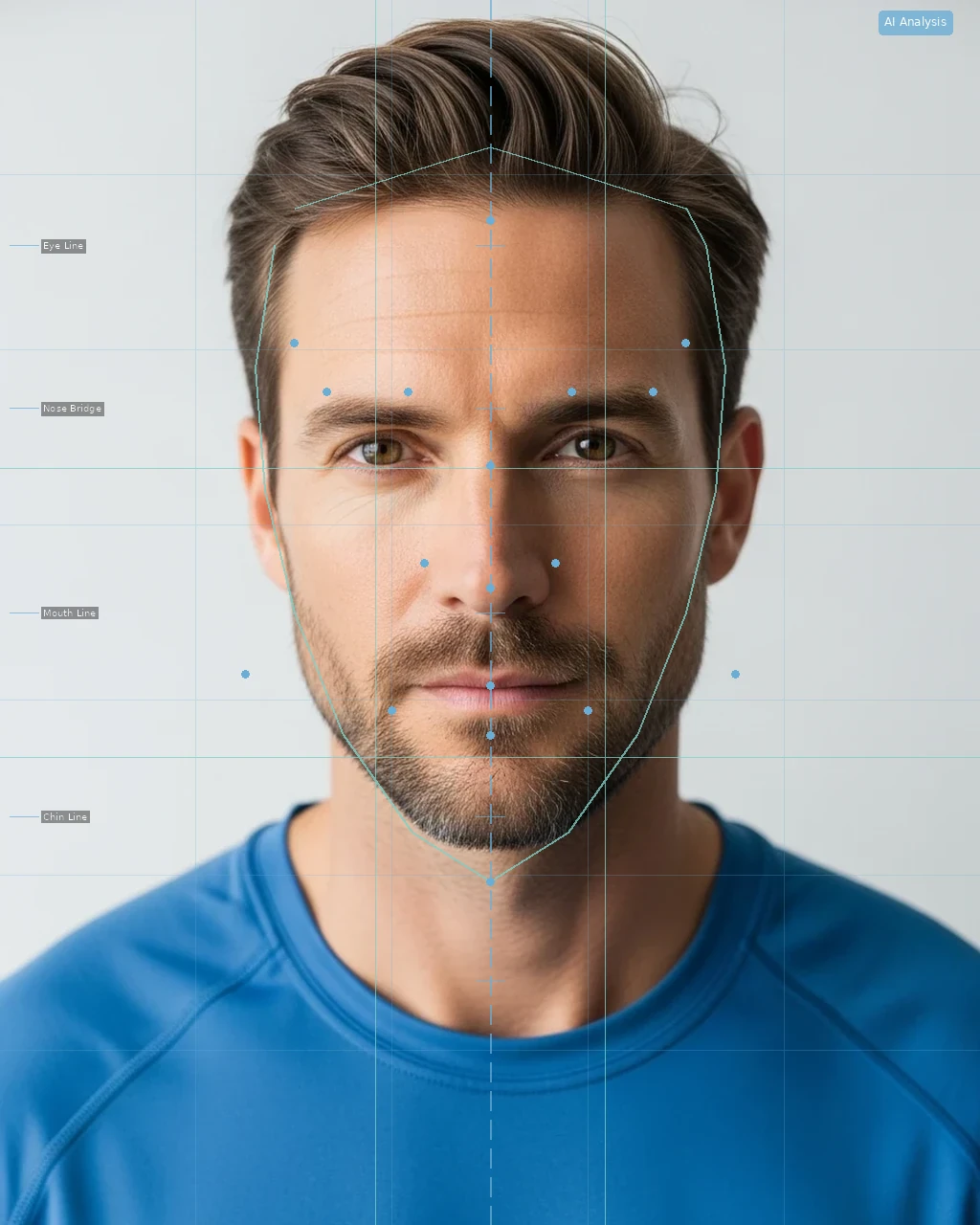
Image capture and landmark mapping. After you upload or take a photo, the system detects facial structure and maps 68 facial landmarks. These landmarks anchor key regions such as the eyes, nose, lips, jawline, brow area, and facial outline to create a standardised geometry for analysis.
Visible age-marker analysis. The model then evaluates 12 age markers, including wrinkle-prone zones, texture variation, symmetry cues, signs of uneven tone, and other visible features associated with aging and skin health. This provides a more nuanced picture than relying on one signal alone.
Scoring and trend-ready results. In under 60 seconds, you receive outputs such as estimated biological age, beauty-related measurements, and skin health indicators. Repeating this over time creates a personal anti-aging diary you can actually use. If you want to see how your routine is performing, the simplest next step is to run a baseline scan today and compare future results under similar lighting conditions.
Because the workflow is fast, structured, and repeatable, Face Age is useful for anyone who wants an aging reversal monitor based on consistent visual analysis rather than memory or guesswork.
What You Will Discover
A strong anti aging progress tracker should do more than tell you that you look older or younger than your age. It should break the result into practical dimensions you can follow over time. That is where Face Age becomes useful as both an assessment tool and an ongoing anti-aging diary.
Instead of a vague verdict, you receive multiple outputs that help explain what may be changing and where to focus your attention.
Biological age estimate: A data-driven estimate based on visible facial aging markers rather than your birth date alone.
Beauty score: A structured rating based on facial proportions, harmony, and presentation-related visual signals.
Symmetry index: A measure of left-right balance, useful for tracking subtle changes in facial appearance over time.
Skin health grade: A summary of visible skin quality indicators such as clarity, evenness, texture, and hydration-related cues.
Aging forecast: A trend-oriented interpretation that helps you understand whether your current pattern is stable, improving, or showing accelerated visible aging.
Wrinkle and texture insights: Feedback on the areas where lines, roughness, or creasing are most detectable.
Photo-to-photo comparison potential: When you analyse consistently, your results become a personal record of how sleep, skincare, stress, sun exposure, or diet may be affecting your face.
This matters because better decisions come from better feedback. When you can see whether changes are concentrated in pigmentation, texture, or structural aging cues, your routine becomes easier to refine. That is the real value of a rejuvenation tracker: it helps turn experimentation into measurement.
The Science Behind Anti Aging Progress Tracking
The science behind anti aging progress tracking sits at the intersection of dermatology, facial morphometrics, and computer vision. Human observers are surprisingly inconsistent at estimating age from memory alone, especially when they are emotionally invested in the outcome. Computational methods improve consistency by extracting repeatable visual features from standardised images.
In skin science, visible aging is commonly associated with changes in collagen, elastin, pigmentation, microrelief, and surface roughness. Research on photoaging has shown that ultraviolet exposure is a major driver of wrinkles, laxity, and uneven pigmentation. That is why two people with similar chronological ages can present very different facial age signatures depending on sun exposure habits and skin protection.
In dermatology, the work of Albert M. Kligman helped distinguish intrinsic aging from photoaging, making it easier to understand why environmental exposure accelerates visible decline in skin quality. In aesthetics and facial analysis research, computer vision systems now assess landmarks, ratios, texture maps, and regional contrast to estimate age-related changes more systematically than subjective observation alone.
PubMed-indexed studies have explored perceived age as a clinically meaningful biomarker because visible age can correlate with health-related variables and environmental burden. For background reading, see this PubMed article on perceived age as a biomarker of aging. Research has also examined skin quality, facial features, and age estimation using image analysis and machine learning methods, supporting the use of structured facial metrics in repeated assessments. Another useful reference is this PubMed paper on perceived age and skin aging features.
For a tracker to be useful, however, science must be paired with consistency. Same-angle photos, similar lighting, neutral expression, and repeated measurements are crucial. A single result is informative, but trend data is much more powerful. That is why the idea of an aging reversal monitor works best when used over weeks and months. You are not trying to prove perfection. You are trying to detect direction.
That direction can reflect real-world interventions. Better sleep may reduce dullness and under-eye fatigue. Improved sun protection can slow pigmentation accumulation. Weight training and protein adequacy may indirectly support healthier appearance by improving body composition and recovery. Tracking does not replace a dermatologist, but it can help you quantify visible outcomes from the choices you make every day.
Key Factors That Influence Your Anti-Aging Metrics
Your anti-aging metrics are shaped by a combination of biology and behaviour. Some inputs are fixed, while others are highly modifiable. Understanding the difference helps you interpret results more realistically and use your tracker more effectively.
Genetics influence baseline skin thickness, facial structure, pigmentation tendencies, and how quickly some visible signs of aging emerge. You cannot change your genetic template, but you can change how environmental stress interacts with it.
Lifestyle often has the biggest day-to-day effect. Sleep quality, alcohol intake, smoking, chronic stress, and dietary patterns can all alter facial appearance through inflammation, fluid balance, glycation, or impaired recovery. Even a few nights of poor sleep can affect under-eye appearance and skin dullness.
Environment matters greatly. UV exposure is the most documented external contributor to visible skin aging, but air pollution and climate conditions can also influence oxidative stress and barrier function. If your tracker shows worsening pigmentation or texture despite a strong skincare routine, sun exposure habits may be the missing variable.
Skincare consistency also plays a major role. Sunscreen, retinoids, moisturisers, antioxidants, and gentle cleansing can all affect visible age markers over time. The key is regularity rather than product hopping.
If you want your anti aging progress tracker to become genuinely useful, run scans under similar conditions and compare them against changes in routine. That is how a simple score becomes an actionable signal, and it is also why trying Face Age on a consistent schedule can give you clearer feedback than occasional mirror checks.
Expert Tips to Improve Your Anti-Aging Metrics
Improving anti-aging metrics does not require chasing every trend. The strongest evidence still supports a handful of core habits that reduce visible aging and improve skin quality over time. If you use your tracker regularly, these are the behaviours most worth testing and monitoring.
Wear broad-spectrum sunscreen daily. UV exposure is one of the clearest drivers of wrinkles, pigmentation, and loss of elasticity. Consistent sunscreen use is one of the most defensible ways to protect your long-term skin age profile.
Prioritise sleep. Sleep supports recovery, barrier function, and inflammatory regulation. Short or irregular sleep can show up in your face quickly, especially around the eyes and skin tone.
Stay hydrated and support the skin barrier. Hydration alone will not erase wrinkles, but well-supported barrier function can improve texture, comfort, and visible smoothness. A simple routine with cleanser, moisturiser, and sunscreen is often more effective than an overloaded shelf.
Use evidence-based skincare. Retinoids, vitamin C, niacinamide, and well-formulated moisturisers can support tone, texture, and resilience. Introduce products gradually and track what changes after several weeks, not several days.
Exercise and eat for recovery. Regular exercise supports circulation, metabolic health, and stress regulation. A diet rich in protein, fibre, and micronutrient-dense foods may indirectly improve skin appearance by supporting tissue maintenance and reducing systemic stress.
Reduce smoking and excess alcohol. Both are associated with poorer skin quality and faster visible aging in many people.
For readers who want to go deeper into the evidence, Face Age publishes scientific resources and methodology notes at Face Age Research. Use your results as feedback, not as judgment. The goal of a good anti-aging diary is to help you identify what is working, then stay consistent long enough to see meaningful trends.
AI Analysis vs Traditional Methods
Traditional anti-aging assessment usually relies on one of three things: a mirror, a dermatologist visit, or manual photo comparison. Each can be useful, but each has limitations. Mirror checks are subjective and influenced by mood, lighting, and expectation. Dermatologist consultations provide expertise, but they are not always frequent, fast, or designed for regular trend monitoring. Manual photo comparisons can help, yet they are difficult to standardise.
AI-based analysis offers a different advantage: consistency at scale. By applying the same computational method to each image, Face Age can estimate visible age markers, symmetry, and skin-related signals in a repeatable format. That makes it better suited to tracking than casual observation alone.
It is important to stay realistic. AI analysis does not replace medical diagnosis or in-person dermatology. What it does offer is structured, instant feedback that helps you detect gradual changes. For a transactional user who wants an aging reversal monitor they can use today, that speed and repeatability are often the difference between intention and action.
Your Privacy and Data Security
Privacy matters when you are uploading a face photo, and Face Age is built with that in mind. Photos are processed in-browser whenever possible, which means the analysis happens locally on your device rather than being permanently stored on a remote server.
Your image is never stored for resale or shared with third parties. After analysis, the photo is deleted and not retained as a user-identifiable asset. Face Age also follows GDPR-compliant privacy principles, including minimisation of personal data and transparent handling practices.
That makes the platform easier to use as a regular anti aging progress tracker. You can focus on measuring change without worrying that your face image is being added to a marketing database or circulated beyond the analysis itself.
Ready to Discover Your Anti-Aging Metrics?
If you have been relying on guesswork, now is a good time to switch to measurement. An effective anti aging progress tracker can help you see whether your skincare, sleep, nutrition, and sun habits are moving your face in the right direction.
Face Age gives you a fast baseline, clear metrics, and a simple way to build a repeatable anti-aging diary over time. It is free to try, takes under a minute, and does not require a complicated setup. If you want a practical rejuvenation tracker you can start using today, run your first scan and see what your face reveals.
You May Also Like
Red Light Therapy Face Results: What to Expect — Discover red light therapy face results, timelines, skin benefits, and how to...
Gua Sha Results Tracker: See Real Facial Changes — Use a Gua Sha Results Tracker to measure facial changes, skin quality, and...
NAD+ Supplements for Aging: What Actually Works? — Learn how NAD+ supplements for aging may affect energy, skin, and longevity....