What Facial Proportion Analysis Really Reveals About Your Health
Facial proportion analysis is often discussed in beauty terms, but it can reveal much more than whether a face appears balanced. The face changes with age as fat pads shift, collagen declines, bone remodels, and skin loses elasticity. These changes can subtly alter distances and ratios between the eyes, nose, lips, jawline, and forehead.
That matters because proportion is not fixed. A face that once appeared evenly balanced may look different after years of sun exposure, sleep disruption, chronic stress, or changes in body composition. While facial proportions cannot diagnose disease on their own, they can reflect patterns associated with biological aging and skin health.
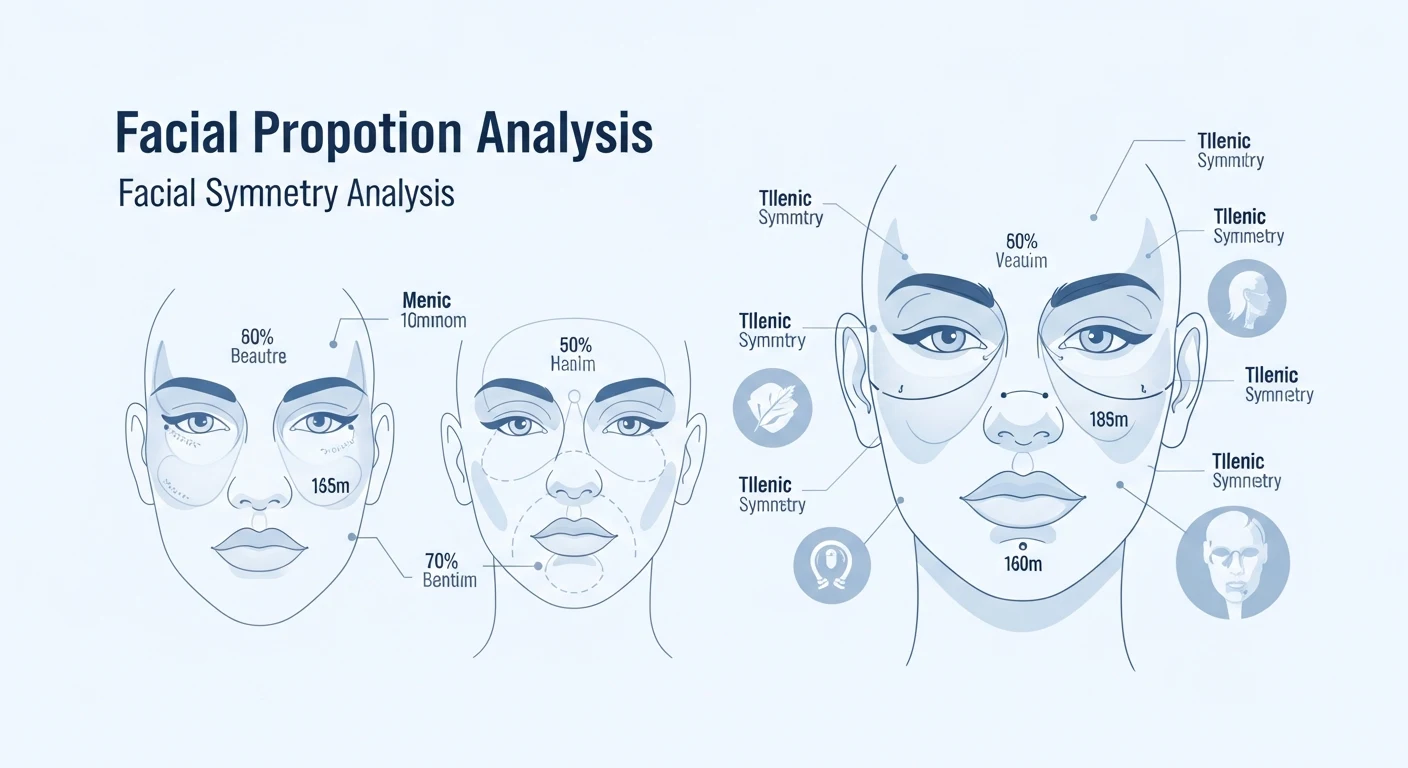
Researchers have long studied facial geometry in relation to attractiveness, development, and aging. Basic ideas such as facial symmetry and proportional balance are linked to how humans perceive youthfulness and vitality. In practical terms, a structured analysis helps separate subjective impressions from measurable data.
- Relative distances between key features can suggest changes in volume and contour.
- Vertical thirds of the face may shift as skin laxity and soft tissue descent increase.
- Horizontal proportions can highlight width relationships around the eyes, cheeks, and jaw.
- Surface cues such as wrinkles and uneven texture add context to proportion findings.
For someone using a face ratio calculator, the real benefit is clarity. Instead of relying on filtered images or broad beauty ideals, you can understand your own baseline. That makes facial measurements more useful for tracking change over time and for connecting appearance with lifestyle, skin condition, and the visible signs of aging.
How Face Age's AI Analysis Works
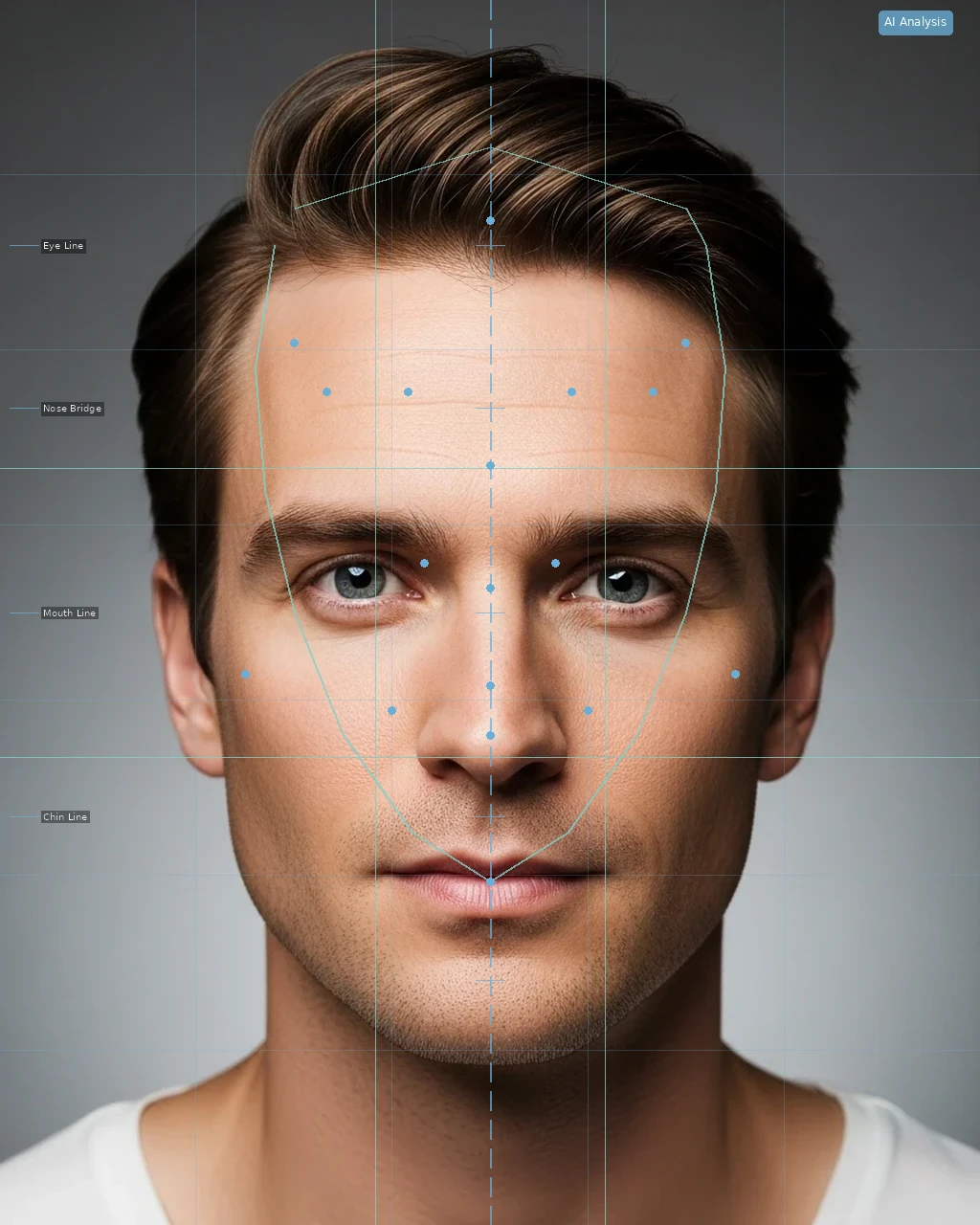
Face Age turns a single photo into a structured facial proportion report in under 60 seconds. Rather than giving a vague score, the system maps 68 facial landmarks and evaluates 12 age markers alongside beauty and skin metrics. This helps place your facial proportions in a broader context, including symmetry, harmony, and visible aging patterns.
The process is designed to be quick, simple, and understandable even if you have never taken facial measurements before. You upload a clear front-facing image, and the system performs the analysis automatically.
Landmark detection: The AI identifies 68 key points across the eyes, brows, nose, lips, cheek contours, jawline, and facial outline. These landmarks create the geometric framework used for ratio analysis.
Metric calculation: Face Age compares distances, angles, and proportional relationships. At the same time, it reviews 12 age markers such as fine lines, texture irregularity, elasticity-related cues, and tone variation.
Personalized reporting: You receive outputs including a beauty score, symmetry index, biological age estimate, skin health signals, and proportion-based insights that are easier to interpret than raw numbers alone.
This combination matters because ideal face proportions are rarely one-number answers. A balanced face depends on several relationships working together. If you want a fast, evidence-informed starting point for understanding your own ratios, Face Age makes that process accessible without a clinic visit or manual measuring tools.
What You Will Discover
A good facial proportion analysis should do more than tell you whether your features are close to a classic ideal. It should explain how your face is structured now, what appears strong, and where visible aging or imbalance may be influencing the overall impression. Face Age organizes those findings into outputs that are easier to use in everyday life.
Instead of isolated facial measurements, you receive a more complete profile that connects geometry with visible skin condition and age-related changes. That makes the report useful whether your interest is beauty, healthy aging, or simple curiosity.
- Biological age estimate: A visual age assessment informed by skin texture, wrinkle patterns, elasticity cues, and facial aging markers.
- Beauty score: A composite score based on harmony, balance, and feature relationships rather than one rigid standard.
- Symmetry index: A measure of how closely one side of the face aligns with the other, useful for understanding visual balance.
- Skin health grade: Indicators related to hydration appearance, evenness, clarity, and visible UV-linked damage.
- Aging forecast: A forward-looking estimate of how current patterns may influence visible aging over time.
- Facial ratio insights: Information on vertical thirds, facial width relationships, eye spacing, lower-face balance, and other proportion cues.
- Trackable baseline: A starting point you can revisit after skincare, lifestyle, or wellness changes to monitor trends.
This is especially useful for people who have been comparing themselves to generic templates online. Real faces vary. The value comes from understanding your own structure and using that knowledge in a practical, realistic way.
The Science Behind Facial Proportion Analysis
The science of facial proportion analysis sits at the intersection of anatomy, anthropology, dermatology, and computer vision. Historically, artists and surgeons used direct measurements and visual rules to describe harmonious faces. Today, digital imaging makes it possible to quantify many of those relationships with greater consistency.
One important concept is facial landmarking. In computer vision, landmarks are specific anatomical points used to model shape. By mapping the corners of the eyes, the tip and base of the nose, the edges of the lips, the chin point, and the facial contour, algorithms can estimate distances, proportions, and asymmetries. This is far more precise than eyeballing a selfie.
Clinical and aesthetic literature also supports the idea that aging changes proportion indirectly. Work by researchers such as Bryan Mendelson and Steven Fagien has emphasized that facial aging is not just about wrinkles. It includes volume redistribution, ligament laxity, and contour changes, all of which affect how balanced the face appears. Skin science adds another layer: collagen loss, photoaging, and pigmentation changes alter visual harmony even when bone structure remains the same.
For background on facial shape research, see the golden ratio, which is often discussed in aesthetics, though it should be treated as a reference concept rather than a universal rule. More clinically grounded evidence comes from dermatology and aging research. For example, reviews on facial aging mechanisms describe how soft tissue descent, skeletal remodeling, and skin changes interact. Research on photoaging helps explain why sun exposure can change the apparent quality and balance of the face over time.
Another key point is that attractiveness research does not support one perfect template. Studies frequently show that observers respond to a combination of symmetry, averageness, skin clarity, and age-related cues. In other words, ideal face proportions are better understood as ranges, not commandments.
This is why AI-based analysis can be valuable when used responsibly. It can measure repeatable geometry and visible markers at scale, but it should not pretend to define beauty for everyone. The best use of facial measurements is personal: to understand your own facial structure, compare changes over time, and identify modifiable factors that affect how balanced and healthy your face appears.
Key Factors That Influence Your Facial Proportions
Some aspects of facial proportion are inherited. Genetics shape bone structure, eye spacing, jaw width, nasal form, and the relative dimensions of the upper, middle, and lower face. That genetic baseline explains why two healthy people can look very different while both appearing balanced.
But proportions are also influenced by changeable factors. Aging affects volume distribution, especially in the cheeks, temples, and under-eye area. Skin thinning and collagen loss can make the lower face look heavier or less defined, changing the visual relationship between features. Weight fluctuations may also alter contour, especially around the jawline and midface.
Environment plays a major role. Chronic ultraviolet exposure can accelerate photoaging, leading to uneven tone, rougher texture, and fine lines that disrupt the impression of facial harmony. Sleep deprivation, smoking, and high stress can affect circulation, inflammation, and tissue quality, all of which change how proportions are perceived.
- Genetics: Bone structure, natural symmetry, facial width, and feature placement.
- Aging: Volume loss, skin laxity, wrinkle formation, and contour descent.
- Lifestyle: Sleep, alcohol, smoking, exercise, and nutrition habits.
- Environment: UV exposure, pollution, and climate-related skin stress.
- Skincare: Daily protection and barrier support influence visible smoothness and evenness.
The encouraging part is that not every facial metric is fixed. While you cannot change your underlying anatomy without medical intervention, you can influence skin quality, swelling, definition, and the visible signs that make proportions appear more or less balanced. If you want to see how your current habits show up in your facial measurements, running an analysis gives you a useful baseline to work from.
Expert Tips to Improve Your Facial Proportions
Improving facial proportions does not mean trying to force your face into a mathematical ideal. In most cases, the goal is to improve the appearance of balance by supporting skin quality, reducing puffiness, preserving contour, and slowing visible aging. Small changes can have a surprisingly meaningful effect on how harmonious the face looks.
Start with sun protection. Daily broad-spectrum sunscreen helps prevent collagen breakdown, pigmentation irregularity, and texture roughness that can make features look less refined over time. Consistency matters more than occasional intense effort.
Sleep is another major factor. Poor sleep is associated with dullness, under-eye changes, and increased perception of fatigue. Adequate rest supports recovery, circulation, and a fresher-looking face. Hydration and a nutrient-dense diet also matter, especially for skin barrier function and inflammation control.
- Wear sunscreen every day: UV damage accelerates uneven tone and visible aging.
- Prioritize sleep: Aim for a regular schedule to reduce tired-looking features.
- Support skin with simple basics: Cleanser, moisturizer, sunscreen, and evidence-based actives when tolerated.
- Eat for skin health: Include protein, omega-3 fats, fruits, vegetables, and adequate fluids.
- Exercise regularly: It supports circulation, metabolic health, and long-term aging resilience.
- Reduce smoking and excess alcohol: Both can worsen dehydration and visible aging.
Facial measurements can also be useful for tracking progress after routine changes. If you improve sleep, become more consistent with sunscreen, or address dehydration, you may notice changes in skin clarity, puffiness, and overall harmony before you see dramatic structural differences. For evidence summaries on aging and skin biology, explore Face Age Research.
The most realistic approach is to focus on modifiable factors, not perfection. A healthier-looking face often appears more proportionate because the skin surface, contours, and expression cues are working together more effectively.
AI Analysis vs Traditional Methods
Traditional facial proportion assessment usually falls into one of three categories: manual measuring, subjective visual judgment, or specialist evaluation. Manual methods can be time-consuming and inconsistent. Subjective assessment is fast, but it varies widely depending on lighting, angle, and personal bias. Specialist consultations can be valuable, yet they require appointments, cost, and interpretation that may not be easy to compare over time.
AI-based analysis offers a different advantage: repeatable measurement at speed. By detecting 68 landmarks and applying the same framework every time, Face Age reduces some of the inconsistency that comes from mirrors, screenshots, and guesswork. Results are not a medical diagnosis, but they can provide a structured baseline for beauty, symmetry, skin health, and aging metrics.
In practice, this makes AI ideal for education and self-tracking. If you want quick insight before making skincare changes or simply want a more objective face ratio calculator, instant analysis is often more useful than trying to measure your own face by hand.
Your Privacy and Data Security
Privacy matters when you are uploading a face photo. Face Age is designed with a privacy-first approach so users can explore facial proportion analysis without worrying about unnecessary data exposure.
Your photo is processed in-browser rather than being permanently stored on remote servers. Images are not kept after analysis, are not shared with third parties, and are handled in line with GDPR-compliant principles. That means the focus stays on generating your results, not building a photo database.
For many users, this is a major advantage over apps that require account creation before delivering any useful information. You get the benefit of rapid AI analysis with tighter control over personal data.
Ready to Discover Your Facial Proportions?
Facial proportion analysis can help you understand more than facial balance. It gives you a measurable view of symmetry, harmony, skin quality, and visible aging patterns, all in one place. Instead of relying on generic ideals, you can see how your own facial measurements work together right now.
With Face Age, the process is free to try, takes under a minute, and requires no complicated setup. If you want a practical, privacy-focused way to explore your face ratio calculator results and track changes over time, this is an easy place to start.
Try Face Age and discover your facial proportions instantly.
You May Also Like
Celebrity Look Alike Test: Find Your Famous Match — Take a celebrity look alike test to find your face match, beauty insights, and...
Am I Attractive Test: See What AI Finds — Take an Am I Attractive Test with AI facial analysis. Get beauty, symmetry and...
Beauty Score Test: What Your Face Reveals — Take a beauty score test to see your facial beauty score, symmetry and skin...