What Age Reversal Tracking Really Reveals About Your Health
Age reversal tracking is not just about vanity. Changes in facial skin texture, wrinkle depth, pigmentation, and contour can reflect a wider story about biology, lifestyle, and cumulative environmental exposure. Researchers have long observed that perceived age often correlates with health-related outcomes, because the face integrates signals from collagen integrity, inflammation, hydration, sleep quality, and photoaging.
One major driver is skin aging, which is shaped by both intrinsic factors such as genetics and extrinsic factors such as ultraviolet exposure, smoking, stress, and pollution. The visible result is not random. Fine lines around the eyes, uneven tone, volume changes, and roughness tend to appear in patterns that can be analyzed repeatedly over time.
Used well, age reversal tracking can help you:
- Spot whether a routine is producing measurable visible change rather than temporary glow.
- Distinguish short-term fluctuations, such as dehydration or poor sleep, from longer-term trends.
- Build accountability by connecting habits with outcomes.
- Create a baseline before interventions such as retinoids, sunscreen use, weight loss, or nutrition changes.
This matters because visible aging is partly cumulative. A single photo can be interesting, but a structured sequence is more powerful. When you compare similar images over weeks or months, you begin to see whether your reverse aging progress is stable, plateauing, or moving in the right direction. That turns the face into a practical biomarker dashboard rather than a source of vague impressions.
Importantly, facial analysis is not a medical diagnosis. It is best understood as a non-invasive monitoring tool that supports better decisions. In that role, it can be surprisingly informative.
How Face Age's AI Analysis Works
Face Age is designed to make anti-aging tracking fast, repeatable, and easy to understand. Instead of asking you to manually score wrinkles or compare old selfies, the system evaluates a consistent set of visible markers in under 60 seconds.
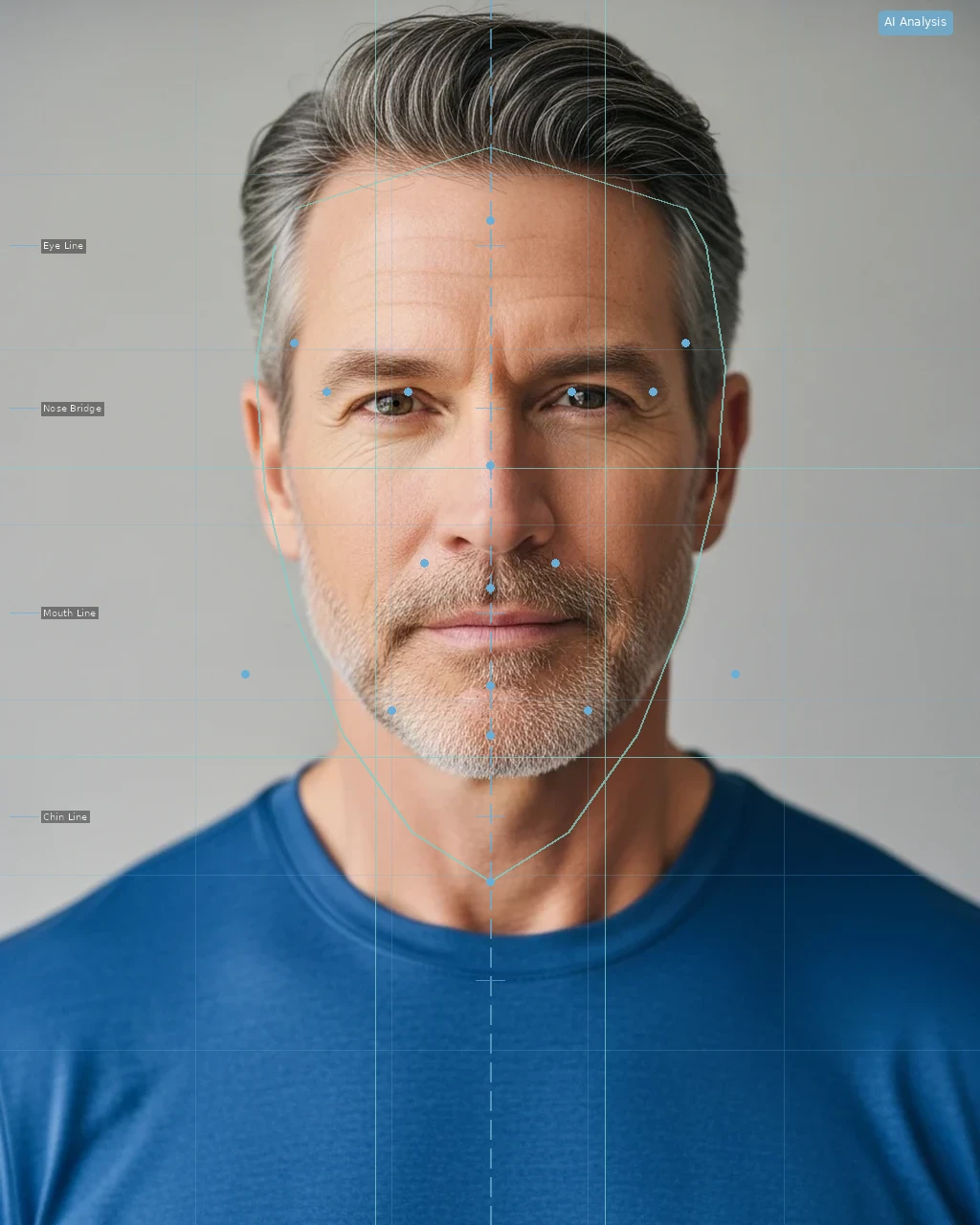
Image capture and landmark mapping. The system identifies 68 facial landmarks across key regions including the eyes, brows, nose, lips, jawline, and facial outline. These landmarks help standardize proportions, alignment, and measurement zones, which is essential for meaningful tracking.
Visible age marker analysis. Face Age evaluates 12 age markers linked to biological age appearance and skin condition. These include wrinkle-prone regions, texture consistency, pigmentation uniformity, symmetry-related cues, and elasticity-associated visual signals.
Result generation and trend review. The platform converts those signals into practical outputs such as estimated biological age, beauty-related metrics, and skin health indicators. When used repeatedly under similar conditions, it becomes a useful rejuvenation monitor for seeing whether changes are moving in the right direction. If you want a quick baseline, you can try Face Age and review your first analysis almost immediately.
The key advantage is consistency. Human judgment varies with lighting, mood, and memory. A computer vision pipeline applies the same rules each time, making it easier to compare one scan with the next. For anyone serious about age reversal tracking, that repeatability is what turns curiosity into data.
What You Will Discover
A good tracking tool should do more than say you look younger or older. It should break visible aging into specific, understandable components. Face Age is built to provide outputs that are useful for both first-time users and people already running detailed longevity or skincare routines.
Estimated biological age appearance. A facial-age estimate based on visible markers associated with skin aging and structural facial cues.
Beauty score. A composite measure influenced by balance, proportion, and visible skin quality.
Symmetry index. An assessment of facial balance across key landmark regions, useful because asymmetry can influence perceived attractiveness and age impression.
Skin health grade. A practical summary of visible clarity, evenness, hydration-related appearance, and texture quality.
Aging forecast. Trend-oriented guidance based on your current visible markers, helping you identify areas that may benefit from targeted prevention.
Wrinkle and texture patterns. Region-based insights into where visible aging appears most prominent, such as around the eyes, forehead, or nasolabial area.
Pigmentation and tone consistency. Information on unevenness that may reflect sun exposure, inflammation, or skincare response.
Progress comparison potential. The real power of reverse aging progress comes from repeat use. When you test under similar lighting and angle conditions, you can compare trends rather than guessing.
These outputs help translate a selfie into a structured signal set. Instead of wondering whether your new sunscreen, retinoid, sleep schedule, or protein intake is doing anything, you gain a practical framework for observation. That does not replace a dermatologist, but it does make self-monitoring more disciplined and far less subjective.
The Science Behind Age Reversal Tracking
The idea behind age reversal tracking is simple: visible facial features contain information about biological aging processes. The science supporting that idea comes from dermatology, biomarker research, and computer vision. Skin does not age in a single dimension. It changes through collagen breakdown, elastin alteration, slower cell turnover, pigmentation shifts, vascular changes, and cumulative UV damage. These processes influence the surface features that image analysis can detect.
In dermatology, photoaging has been studied extensively. Ultraviolet radiation accelerates wrinkle formation, pigment irregularities, and loss of elasticity, all of which are visible on the face. The role of UV exposure is so strong that facial appearance can differ dramatically based on long-term sun behavior. A useful overview is available in the PubMed literature on photoaging and prevention, including work indexed at PubMed. Daily broad-spectrum sunscreen remains one of the most evidence-based anti-aging interventions.
Another important concept is perceived age. Studies led by researchers such as Professor Tamar Nijsten and colleagues have explored how perceived age relates to health and aging phenotypes. While not a perfect substitute for molecular biomarkers, facial age impression can correlate with underlying physiological aging. That is why facial analysis is increasingly discussed as a practical phenotypic marker rather than just a cosmetic judgment.
Computer vision adds the measurement layer. Landmark-based systems map consistent facial reference points, allowing algorithms to compare shape, proportion, and region-specific skin appearance. This makes repeat analysis more standardized than casual visual comparison. Facial landmarking itself is a foundational task in machine vision; a general background is available at Wikipedia. Once landmarks are established, texture and tone features can be assessed in stable zones, improving trend analysis.
The biological rationale also overlaps with skin barrier function and inflammation. Dehydration, poor sleep, and systemic stress can increase dullness, under-eye changes, and roughness in ways that are often visible before they feel dramatic. Meanwhile, longer-term inputs such as smoking, glycation, and inadequate photoprotection can shift visible age markers over months to years. Research on facial aging, including region-specific changes and collagen decline, is also widely represented in PubMed, such as reviews on skin structure and aging biology at PubMed.
So while no photo can reveal everything about your biology, repeated facial analysis can still be meaningful. It works best as a trend tool: a way to observe whether your visible aging trajectory is improving, stable, or worsening under real-life conditions.
Key Factors That Influence Your Age Reversal Tracking Results
If you want accurate anti-aging tracking, it helps to know what can move your scores. Some factors reflect true biological change, while others are short-term variables that influence how your face appears on a given day.
Genetics shape baseline skin thickness, pigmentation tendencies, facial structure, and how quickly certain regions show age. You cannot change genetic architecture, but you can influence how environmental exposure interacts with it.
Lifestyle has a large impact. Sleep restriction can worsen under-eye appearance and dullness. Smoking accelerates wrinkle formation and skin damage. High alcohol intake can contribute to dehydration and transient puffiness. Exercise, in contrast, often supports circulation, metabolic health, and long-term resilience.
Environment matters more than many people realize. UV exposure is a major driver of extrinsic aging. Air pollution may also contribute to pigment changes and oxidative stress. Dry indoor air, heat, and seasonal shifts can temporarily affect texture and hydration-related appearance.
Skincare and nutrition influence what the camera sees. Consistent sunscreen use, retinoids, moisturizers, and pigment-targeting actives can change skin appearance over time. Sufficient protein, essential fats, and micronutrients support repair processes, although no supplement can fully override poor habits.
For better tracking, keep your conditions consistent:
- Use similar lighting and camera angle.
- Take photos at a similar time of day.
- Avoid heavy makeup if you want skin markers to be visible.
- Repeat scans weekly or monthly rather than obsessing daily.
If you are ready to establish a baseline, a quick Face Age scan gives you a starting point you can revisit as your routine evolves.
Expert Tips to Improve Your Age Reversal Tracking Results
The goal of age reversal tracking is not to chase perfection. It is to identify habits that reliably improve visible aging markers. The strongest interventions are often the least glamorous, but they are supported by the best evidence.
Use sunscreen every day. Broad-spectrum SPF is one of the most effective ways to slow photoaging and protect gains you have already made. Without UV protection, many anti-aging interventions work against a constant source of damage.
Prioritize sleep. Chronic sleep loss can affect barrier function, recovery, and visible freshness. Aim for regular sleep timing, not just total hours.
Support hydration. Well-hydrated skin often looks smoother and more even, even though hydration alone will not erase structural wrinkles. Combine internal hydration with a barrier-supportive moisturizer.
Eat for skin structure. Protein, vitamin C, carotenoid-rich produce, and omega-3 fats support tissue maintenance and antioxidant defense. Extreme dieting can reduce facial fullness and make some people look older.
Exercise consistently. Resistance training and aerobic exercise support metabolic health, circulation, and insulin sensitivity, all of which can indirectly influence aging appearance.
Use evidence-based skincare. Retinoids, niacinamide, gentle exfoliation, and pigment-management strategies can improve texture and tone over time. Introduce actives gradually to avoid irritation.
Track, then adjust. A rejuvenation monitor is useful because it lets you test whether changes are helping. If a new routine causes irritation, dryness, or more visible redness, your trend data may catch that earlier than memory will.
For readers who want to connect visible results with published evidence, Face Age maintains scientific background resources at https://face-age.net/research. The most effective strategy is usually consistent basics plus careful measurement. Over time, small improvements can become obvious when you compare like with like.
AI Analysis vs Traditional Methods
Traditional age assessment usually falls into one of three categories: self-judgment in the mirror, manual photo comparisons, or in-person expert assessment. Each has value, but each also has limits. Mirrors are subjective, memory is unreliable, and clinic-based evaluations can be time-consuming and expensive for routine tracking.
Face Age offers a faster alternative by applying the same analytic process each time. Instead of relying on impression alone, it measures landmark geometry, visible age markers, and skin-quality cues in seconds. That makes it easier to monitor reverse aging progress between dermatologist visits or while testing everyday changes like SPF use, improved sleep, or a new skincare plan.
AI analysis is not a replacement for medical evaluation, especially if you have a suspicious lesion or active skin disease. But for routine trend monitoring, it is hard to beat the combination of speed, consistency, and convenience. In practical terms, it turns occasional guesswork into ongoing measurement.
Your Privacy and Data Security
Privacy matters when facial images are involved. Face Age is designed with a privacy-first approach so you can use age reversal tracking without worrying that your photo will become part of a hidden dataset.
Photos are processed in-browser, which means analysis happens locally on your device rather than being stored on remote servers for later use. Images are never stored after analysis, are deleted immediately, and are not shared with third parties. The platform is built to align with GDPR-compliant data handling principles.
That approach reduces friction for users who want a quick, private baseline. You get the benefit of a measurable analysis without creating a long-term image trail.
Ready to Discover Your Age Reversal Tracking Baseline?
If you want a clearer picture of whether your routine is actually working, age reversal tracking is one of the most practical places to start. It gives you a measurable baseline, highlights visible aging patterns, and helps you monitor change over time instead of relying on guesswork.
Face Age makes that process simple: fast analysis, no complicated setup, and results in under a minute. If you are curious about your current biological age appearance, skin health signals, and beauty metrics, try Face Age now and turn your next selfie into a smarter progress check.
You May Also Like
Red Light Therapy Face Results: What to Expect — Discover red light therapy face results, timelines, skin benefits, and how to...
Facial Rejuvenation Score: What Yours Reveals — Check your Facial Rejuvenation Score to measure anti-aging results, skin...
NAD+ Supplements for Aging: What Actually Works? — Learn how NAD+ supplements for aging may affect energy, skin, and longevity....