What Microneedling Progress Tracking Really Reveals About Your Health
Microneedling is often framed as a cosmetic procedure, but the visible changes people watch for are tied to broader skin biology. A good progress tracker does more than show whether your skin looks smoother in a photo. It can reveal patterns in barrier recovery, collagen response, inflammation, pigmentation, and how consistently your skin is aging over time.
The skin is the body’s largest organ, and changes in texture, fine lines, uneven tone, and laxity reflect both local skin processes and whole-body influences. Collagen turnover, hydration, oxidative stress, sleep quality, and UV exposure can all shape your results. That is why microneedling before after comparisons are most useful when they are standardized rather than emotional or anecdotal.
Microneedling itself is part of a wider category of controlled skin injury therapies designed to stimulate repair. This process is closely linked to the structure of collagen and to the skin’s wound-healing cascade. If your tracker shows improving texture and softening lines after several weeks, that may reflect better remodeling rather than a temporary glow from hydration alone.
- Texture change can suggest improved surface renewal and collagen remodeling.
- Wrinkle visibility may reflect shifts in elasticity, hydration, and repeated facial movement patterns.
- Evenness and clarity can reveal how your skin is handling inflammation and post-treatment recovery.
- Symmetry and volume cues help show whether gains are globally visible or limited to certain areas.
In short, a microneedling progress tracker matters because it converts a subjective beauty treatment into a measurable skin-health trend. That is especially valuable if you are investing time, money, and patience into collagen induction therapy and want evidence that your routine is actually moving in the right direction.
How Face Age's AI Analysis Works
Face Age is designed to make microneedling progress tracking simple enough for regular use but detailed enough to be meaningful. Instead of a casual side-by-side photo comparison, the system evaluates visible facial patterns with a standardized computer vision workflow. The analysis completes in under 60 seconds, so it is practical for weekly or monthly check-ins.
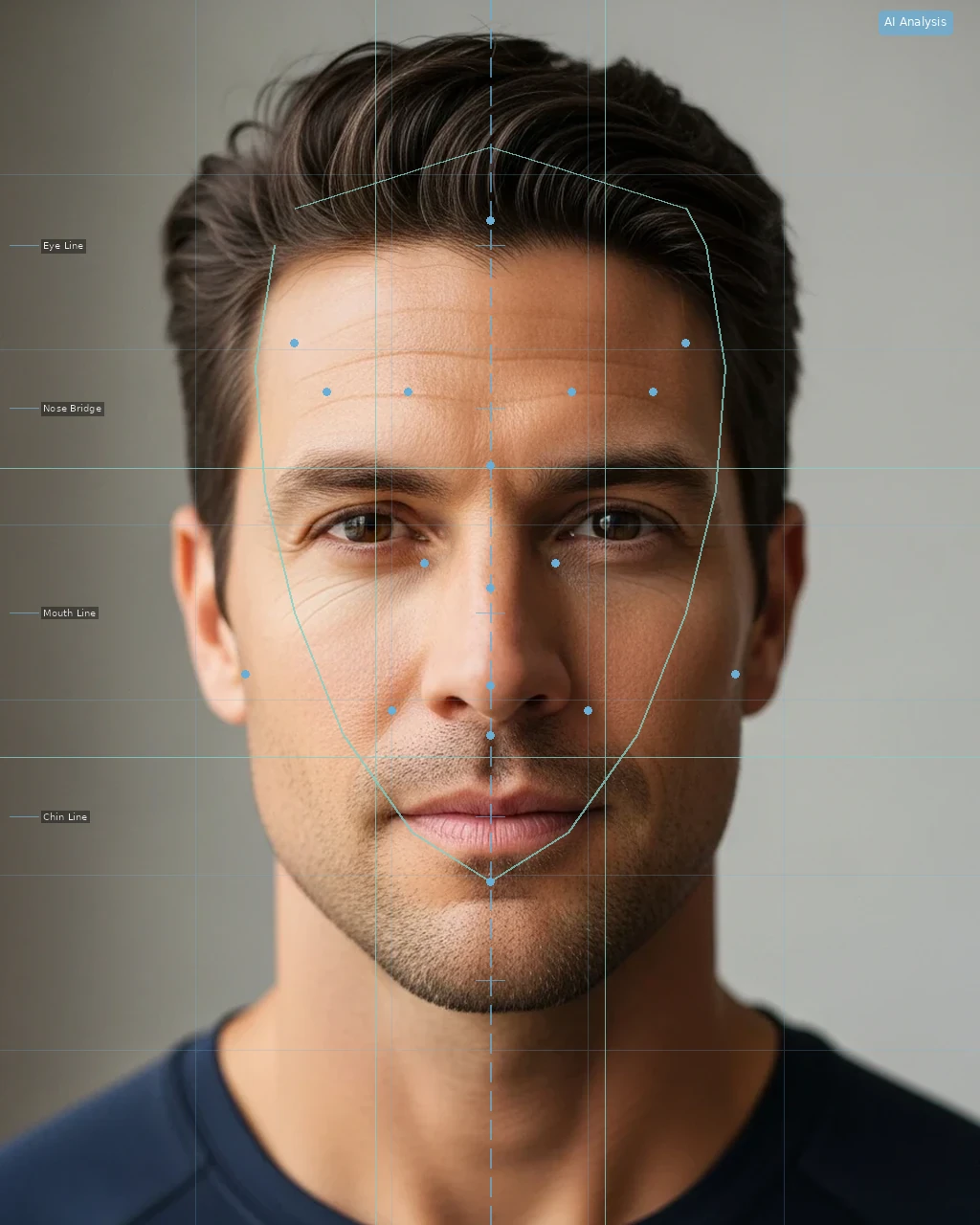
Image capture and landmark mapping. After you upload a clear face photo, the system identifies 68 facial landmarks across key regions such as the eyes, forehead, cheeks, nose, jawline, and mouth. These reference points help standardize measurements from one session to the next.
Age and skin marker analysis. The platform evaluates 12 age markers, including cues related to wrinkles, texture variation, tone evenness, facial proportions, and visible elasticity indicators. This creates a structured baseline for comparing microneedling before after changes over time.
Result generation and progress insight. You receive outputs such as estimated biological age, beauty-related harmony scores, and skin health indicators that make derma rolling results easier to interpret. If you are tracking a treatment series, Face Age gives you a repeatable framework rather than a guess based on lighting and memory.
This matters because progress is often slow and non-linear. A tool that standardizes analysis can help you decide whether to continue your current routine, adjust your schedule, or simply stay patient while collagen remodeling catches up. If you want a fast baseline before your next session, Face Age provides a friction-light starting point.
What You Will Discover
A microneedling progress tracker is most useful when it moves beyond a single yes-or-no verdict. Face Age organizes visible information into several outputs so you can understand not just whether change is happening, but what kind of change is happening. That gives more context than typical microneedling before after selfies.
When you analyse your photo, you can expect a structured view of facial aging, skin condition, and aesthetic balance. These outputs are especially useful if you are doing collagen induction therapy over several sessions and want to document gradual improvement.
- Biological age estimate: A face-based estimate built from visible aging markers such as lines, texture, and firmness cues.
- Beauty score: A broad harmony-oriented measure based on proportions, feature balance, and visual coherence.
- Symmetry index: A look at how evenly facial features align, which can influence perceived attractiveness and reveal subtle shifts in photos.
- Skin health grade: A summary of visible skin quality indicators such as evenness, clarity, and surface condition.
- Aging forecast: Trend-oriented insight showing how current markers may influence future visible aging if patterns continue.
- Session-to-session comparison: A practical way to judge derma rolling results against a baseline rather than against mood or memory.
These outputs do not replace a dermatologist, but they do help translate a cosmetic journey into data points you can revisit. For people serious about tracking skin change, that can make the difference between random experimentation and informed decision-making.
The Science Behind Microneedling Progress Tracking
Microneedling, also called collagen induction therapy, creates controlled micro-injuries in the skin to stimulate repair pathways. In dermatology, this treatment has been studied for concerns including acne scarring, photoaging, and dyschromia. The visible improvements people seek, such as smoother texture or softer fine lines, are linked to wound healing, fibroblast activity, and extracellular matrix remodeling rather than instant structural transformation.
A foundational review by Fernandes and Signorini helped popularize the concept of percutaneous collagen induction in aesthetic medicine. Later clinical literature, including reviews indexed on PubMed, has examined microneedling’s role in scar management, rejuvenation, and transdermal delivery. The evidence suggests that repeated treatments can improve selected skin outcomes, though response varies with needle depth, treatment interval, skin type, aftercare, and the condition being treated.
From a biology perspective, microneedling activates a repair cascade that may include growth factor release, inflammatory signaling, and new collagen deposition. Research on wound healing helps explain why improvements are delayed. The skin first moves through inflammatory and proliferative phases before remodeling becomes visible. That is why many people notice some short-term plumping yet need weeks or months to evaluate real derma rolling results.
Progress tracking also draws on computer vision science. Facial analysis tools use landmark detection and pattern recognition to compare structural and surface features under standardized conditions. In the aging field, researchers such as Alex Zhavoronkov and collaborators have explored facial biomarkers as proxies for biological aging, while broader computer vision work has shown that algorithms can quantify facial cues more consistently than casual human judgment. A tracker is not diagnosing disease, but it can monitor visible patterns that matter in skin aging and recovery.
Another reason tracking matters is that photos are highly deceptive. Lighting angle, camera distance, focal length, facial expression, and skin hydration can all make a face appear younger or older within minutes. This is well known in image analysis and in dermatology photography protocols. A standardized system reduces some of that noise by anchoring each image to the same landmark geometry and evaluating the same visible markers every time.
There is also an important distinction between immediate cosmetic effects and true remodeling. A fresh treatment may cause transient redness or edema that changes how the skin reflects light. A reliable tracker helps separate those temporary shifts from slower improvements in fine lines, smoothness, and evenness. For anyone investing in a series of sessions, this is where measurement becomes more valuable than hope.
If you want to dive deeper into the evidence base behind skin aging markers and facial analysis, Face Age also maintains a library of summaries and references at https://face-age.net/research. That makes it easier to connect your personal results to the underlying science rather than relying on influencer anecdotes alone.
Key Factors That Influence Your Microneedling Results
No microneedling progress tracker can be meaningful without context. Results depend on much more than whether you used a derma roller or visited a clinic once. Skin response is shaped by a mix of biology, behavior, and environment, which is why one person’s microneedling before after photos may look dramatic while another person’s progress seems subtle.
Genetics influence baseline collagen density, healing speed, pigmentation tendencies, and wrinkle formation. Some people simply remodel tissue faster or show less visible inflammation after treatment. Others are more prone to post-inflammatory pigment change, especially in darker skin tones or after overly aggressive needling.
Lifestyle also matters. Sleep quality, protein intake, smoking status, alcohol use, and stress all affect tissue repair. Chronic sleep restriction and smoking are particularly relevant because they can impair collagen health and microcirculation, limiting how good your skin can look even with consistent treatments.
Environment is another major variable. UV exposure, dry air, pollution, and temperature extremes can increase oxidative stress and undermine gains in clarity and smoothness. If you microneedle regularly but skip daily sunscreen, your tracker may show slower improvement or recurring unevenness.
Skincare routine can support or sabotage progress. Gentle cleansing, barrier-supportive moisturizers, and disciplined sun protection help. Overuse of harsh exfoliants, strong acids, or retinoids immediately around treatment days can lead to unnecessary irritation.
If you want cleaner trend data, use Face Age at consistent intervals, in similar lighting, and before applying makeup. Better tracking leads to better decisions, especially when you are evaluating whether your current collagen induction therapy plan is worth continuing.
Expert Tips to Improve Your Microneedling Results
Microneedling works best when it is part of a broader skin-health strategy rather than a standalone fix. If your goal is better derma rolling results, focus on habits that support collagen synthesis, reduce unnecessary inflammation, and protect the gains you are trying to create. Small, repeatable behaviors often matter more than chasing stronger treatments.
- Use sunscreen every day. Broad-spectrum SPF helps preserve collagen and prevents UV-driven pigmentation that can blur your progress. Consistency matters more than occasional perfection.
- Prioritize sleep. Skin repair is closely tied to recovery biology. Aim for regular, sufficient sleep so wound-healing and barrier restoration can proceed normally.
- Support hydration. Well-hydrated skin often appears smoother and more resilient. Combine internal hydration with a barrier-supportive moisturizer, especially after treatment.
- Eat for collagen support. Adequate protein, vitamin C, zinc, and a nutrient-dense diet help the body build and maintain connective tissue.
- Exercise regularly. Moderate physical activity supports circulation, metabolic health, and stress regulation, all of which can affect skin quality over time.
- Do not over-treat. More frequent or deeper needling is not automatically better. Respect recovery windows and follow professional guidance for device type and depth.
- Standardize your progress photos. Same angle, same lighting, same expression, same distance. This is one of the easiest ways to make microneedling before after comparisons more honest.
It is also worth checking the scientific rationale behind your routine. Face Age’s research page is a useful starting point if you want evidence-based context on aging markers, skin analysis, and measurement principles. Better inputs usually lead to better results.
Finally, be patient. Visible remodeling often takes multiple sessions and several weeks of recovery. The smartest strategy is to combine good treatment habits with objective tracking so you can tell whether slow progress is still real progress.
AI Analysis vs Traditional Methods
Traditional microneedling assessment usually falls into one of three categories: mirror checks, before-and-after selfies, or in-clinic visual evaluation. All three can be useful, but all three are vulnerable to subjectivity. A flattering angle or bright bathroom light can make skin look dramatically better than it did the day before.
Face Age offers a different approach by applying the same analysis framework each time. Instead of relying only on human impression, it evaluates visible markers through structured landmark mapping and image-based scoring. That makes trend detection faster and more repeatable.
Dermatologist visits remain valuable for diagnosis, treatment planning, and managing complications. Manual grading systems also have a place in research and clinical care. But for routine home tracking, an instant AI-based review is more practical than scheduling frequent appointments just to assess subtle change.
The advantage is not that AI replaces expertise. It is that AI makes regular measurement easier, so you can arrive at professional consultations with clearer data and more realistic expectations.
Your Privacy and Data Security
Facial analysis should never require you to trade away control of your images. Face Age is built with a privacy-first model: photos are processed in your browser, not stored in a permanent server archive, and deleted after analysis. Your images are not sold, shared with advertisers, or passed to third parties.
The platform is designed to minimize data exposure while still delivering useful results quickly. That matters when you are tracking sensitive face photos across multiple sessions and want confidence that your microneedling progress history stays private.
Face Age also aligns with GDPR-compliant data handling principles, giving users a clearer and safer way to explore AI skin analysis without the common privacy trade-offs seen in many image-based tools.
Ready to Discover Your Microneedling Results?
If you are serious about tracking collagen induction therapy, guessing is not enough. A microneedling progress tracker helps you measure what is actually changing in your skin, from texture and visible age markers to symmetry and overall skin health signals.
Face Age makes that process fast, private, and easy to repeat. You can get an instant baseline, compare future photos, and build a clearer picture of your microneedling before after progress with no signup required to start. Try Face Age now and see what your skin is really showing.
You May Also Like
NAD+ Supplements for Aging: What Actually Works? — Learn how NAD+ supplements for aging may affect energy, skin, and longevity....
Red Light Therapy Face Results: What to Expect — Discover red light therapy face results, timelines, skin benefits, and how to...
NAC Supplement Skin Benefits: What Science Shows — Explore NAC supplement skin benefits, glutathione support, and skin health...